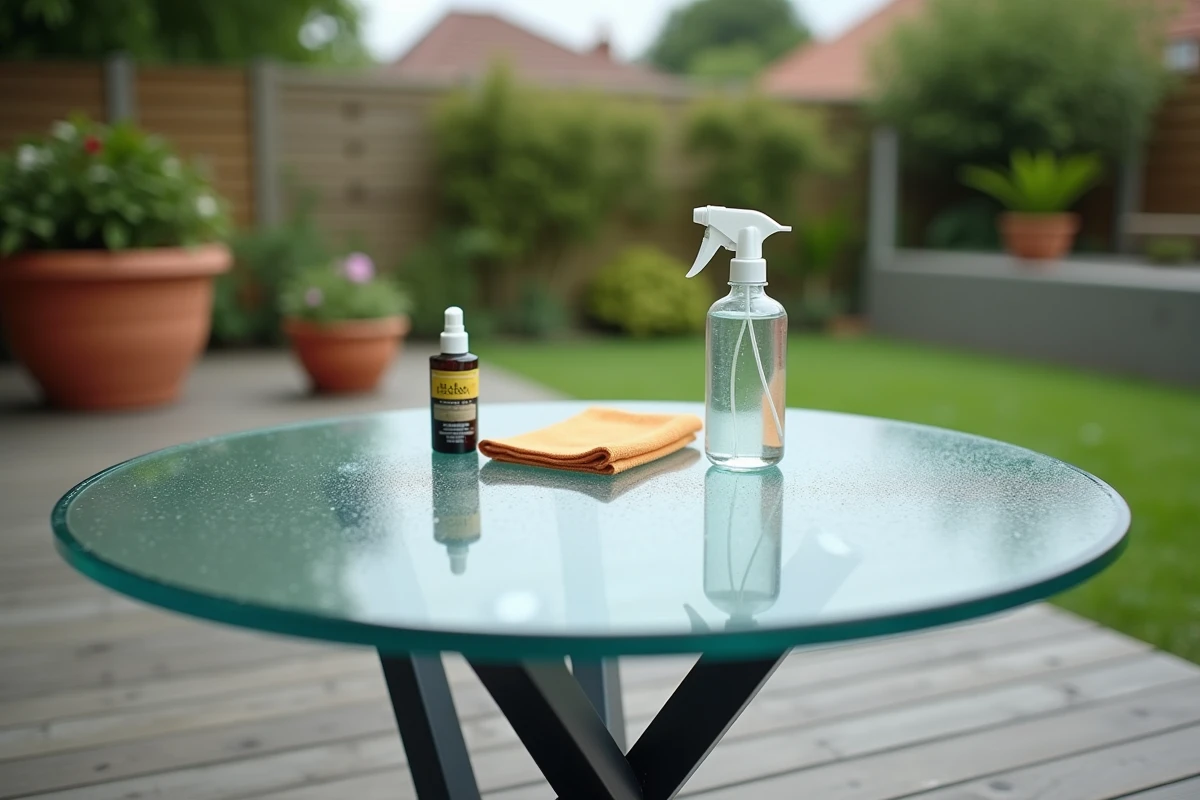
A glass table installed outdoors faces stresses that indoor furniture does not encounter: thermal variations, acid rain, hail, UV, and in certain areas, salt fog. Measuring the actual effectiveness of available protections requires comparing their resistance to these specific aggressions. This overview reviews technical solutions, their limits, and a particular case rarely addressed: the chemical erosion of tempered glass in coastal areas.
Comparison of protections for outdoor glass tables
Not all protections respond to the same aggressions. The table below contrasts the main options according to their ability to block scratches, moisture, and UV.
| Protection | Scratch-resistant | Moisture-resistant | UV-resistant | Estimated lifespan |
|---|---|---|---|---|
| Coated polyester cover | Indirect (prevents abrasive deposits) | Good | Variable depending on weight | 2 to 4 seasons |
| Adhesive protective film | Good | Low | Low | 1 to 2 seasons |
| Recycled rubber underlay | Good (blocks sand) | None | None | 3 to 5 seasons |
| Oilcloth tablecloth | Average | Good | Average | 1 to 2 seasons |
| Marine varnish (wood edges) | Not applicable to glass | Very good on wood | Good | 3 to 5 seasons |
Several lessons emerge from this grid. No single solution covers all three types of aggression. A cover protects against water and limits abrasive dust deposits, but does nothing against scratches caused by an object placed directly on the tabletop.
The adhesive film, often recommended for indoor tables, loses its adhesion due to external temperature variations. Its lifespan significantly decreases once exposed to repeated rain.
To protect an outdoor glass table sustainably, combining several devices remains the most reliable strategy: an underlay against micro-scratches, a cover against the elements, and regular maintenance suited to the season.
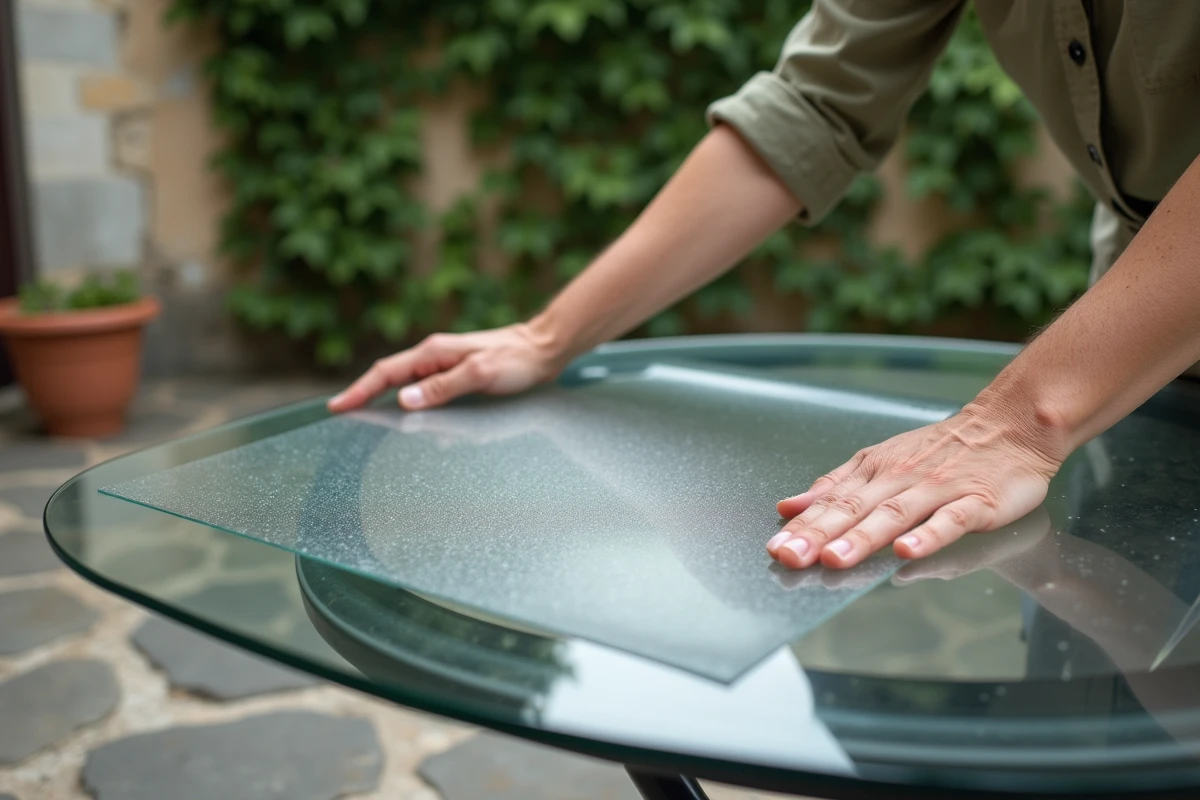
Recycled rubber underlay: an underestimated scratch barrier
Micro-scratches on outdoor glass rarely come from direct impact. They most often result from sand or mineral dust particles trapped between the tabletop and an object placed on it (plate, flower pot, vase).
User feedback on specialized forums (Web Jardin, thread “Protections tables verre 2025-2026”, over 200 testimonials) reports a significant reduction in micro-scratches thanks to natural rubber underlays. Placed under textile protections, these mats prevent the accumulation of abrasive sand blown by the wind.
Recycled rubber has another advantage: it does not chemically migrate to the glass, unlike some soft plastics that can leave sticky marks after prolonged exposure to the sun.
Criteria for choosing an effective underlay
- Slightly textured surface to maintain grip without sticking to the glass, even in hot weather
- Thickness sufficient to absorb micro-vibrations (wind, light impacts) without creating instability
- UV resistance confirmed by the manufacturer, as low-quality rubber disintegrates in one season and produces abrasive particles itself
Hybrid glass-wood tables: marine varnish or stain on the edges
Many garden tables combine a tempered glass top with a wooden frame or legs. The degradation of the wood eventually affects the stability of the top, and thus its longevity.
The V33 technical guide (2026 edition) indicates that alkyd marine varnishes offer 30% better adhesion than stains on wood parts exposed to the elements, according to accelerated tests. This type of varnish does not migrate to the adjacent glass, preventing halos or greasy deposits on the tabletop.
On the other hand, stain remains preferable if the wood should retain a matte and natural appearance. It penetrates the fiber instead of forming a film on the surface, which limits peeling. The choice thus depends on the desired aesthetic result as much as on technical performance.
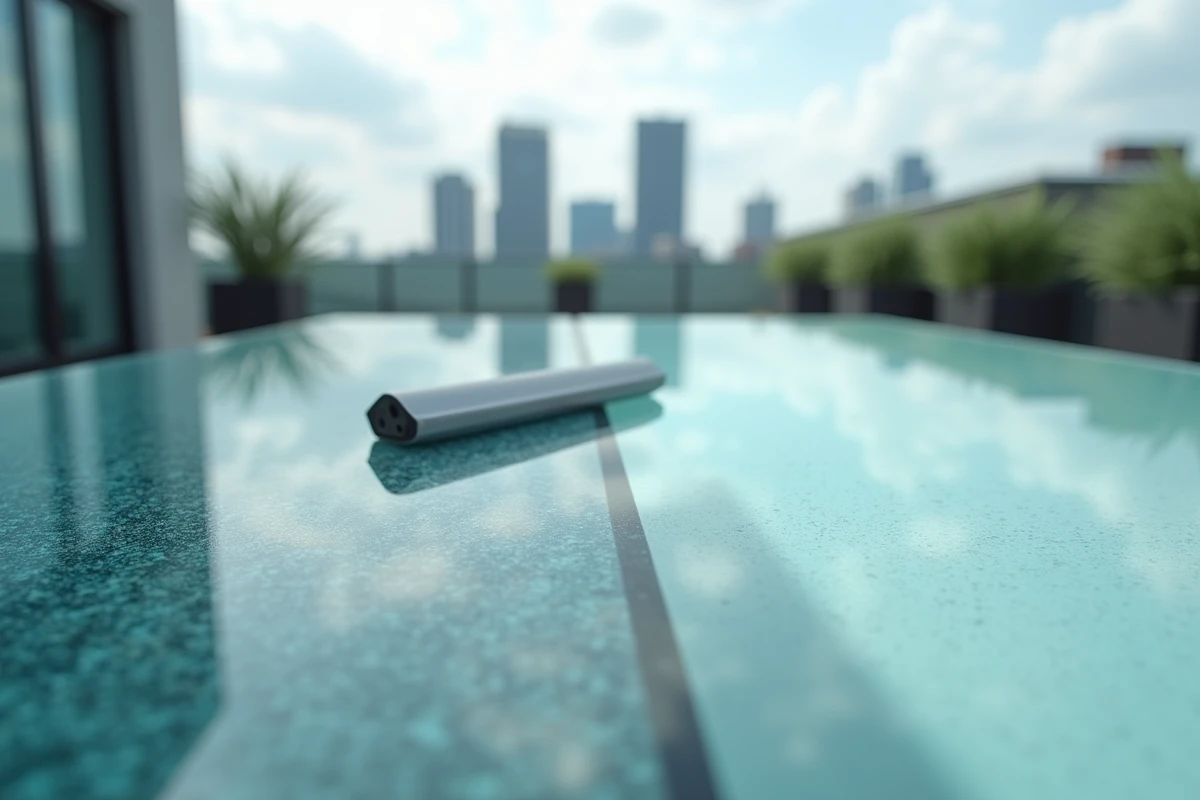
Tempered glass in coastal areas: erosion from sea salt
Garden furniture maintenance guides rarely address a problem specific to coastal regions: salt fog accelerates the chemical erosion of the surface of tempered glass. Suspended sea salt deposits as micro-crystals that, combined with moisture, create an aggressive alkaline environment for the glass’s compression layer.
This erosion does not manifest as visible cracks. It produces a whitish veil, a gradual loss of transparency, and weakens the mechanical resistance of the tabletop over the long term.
Cleaning and protection suited to coastal areas
A rinse with fresh water after each episode of marine wind significantly limits salt deposits. Tap water is sufficient, provided it is not allowed to dry in the sun (the droplets themselves leave limescale marks).
- Rinse the tabletop with clear water at least twice a week during windy season
- Use a damp microfiber cloth, never ammonia-based products that attack the surface treatment
- Apply a protective cover whenever the table is not in use, even in summer, to block overnight salt deposits
- Check at the beginning of each season for the appearance of a milky veil, a sign of erosion already underway
Coated polyester covers with a sufficiently dense weight remain the most effective barrier against suspended salt. They should cover the entire tabletop and extend below the level of the frame to prevent fog from rising from below.
Seasonal maintenance of outdoor glass furniture
Protection also involves a suitable maintenance schedule. In winter, snow and frost require storage in a sheltered place or, if not possible, a reinforced cover with condensation drainage. Standing water under a waterproof cover can cause as much damage as the absence of a cover.
In spring, a complete cleaning of the tabletop with warm water and diluted white vinegar removes residues accumulated during winter. This mixture dissolves limescale without attacking tempered glass or laminated glass.
In summer, UV remains the main degrading factor for the protective accessories themselves. Covers and tablecloths lose their waterproofing after one or two seasons of continuous exposure. Planning for their regular replacement is an integral part of the protection strategy.
The key factor that distinguishes well-maintained outdoor glass furniture from a dull and scratched tabletop rarely lies in the choice of a single product. It is the combination of underlay, cover, and regular cleaning that produces lasting results, with adjustments according to the environment, coastal or continental.