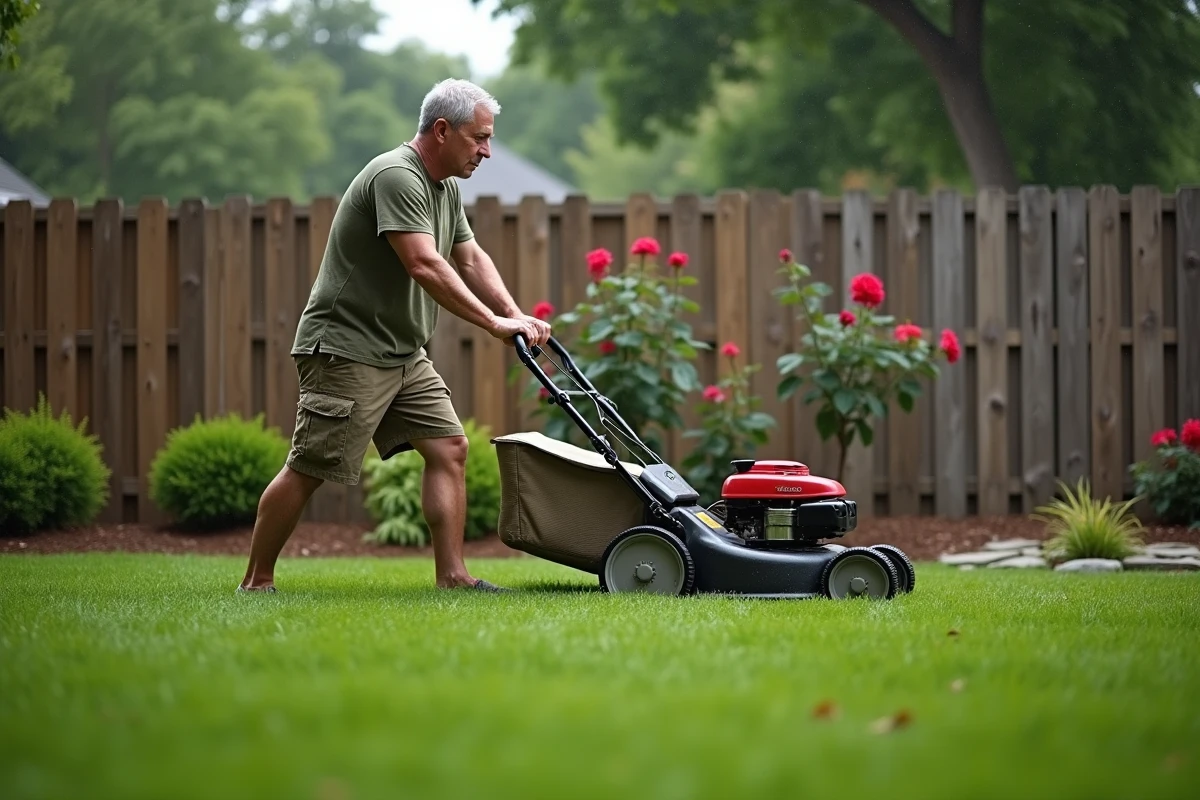
The question arises every spring as soon as the sky clouds over: should we take out the mower now or wait until the rain stops? The logical reflex is to mow as soon as the rain ceases, to enjoy a fresh lawn. However, this reflex causes more problems than it solves, because the state of the soil matters more than that of the sky.
Drying the soil after rain: the criterion that the weather does not provide
Classic maintenance guides pit “before” and “after” the rain against each other as if the choice were limited to two time slots. The decisive parameter is not the timing of the rain, but the time it takes for the soil to drain excess water. This process, called drying, depends on the texture of the ground, the slope, and the amount of rain that has fallen.
On clay soil, several days may be needed before the ground regains sufficient bearing capacity. On sandy soil, a few hours may suffice. Météo-France reminds us in its regional climate reports for 2025 that spring rain episodes are becoming increasingly concentrated, which extends the drying times in many French regions.
The practical test remains the most reliable: walk on the lawn. If the shoes sink or leave clear footprints, the soil is not ready for mowing. The “before or after” debate then loses its meaning in favor of a direct reading of the terrain.
Gardeners looking to mow before or after the rain benefit from reasoning in terms of bearing capacity rather than weather calendars.

Mowing on wet soil: compaction, blades, and cutting quality
Mowing on waterlogged ground causes three distinct problems, often confused.
- Soil compaction: the mower’s wheels crush waterlogged soil, reducing surface porosity. The grass roots breathe less well, and the water from the next rain runs off instead of infiltrating. ADEME reports that this runoff also carries fertilizer residues into stormwater systems.
- Pulling of blades: wet grass bends under the blade instead of being cut cleanly. The result is an uneven cut, with torn blades that yellow within a few days. A well-sharpened blade does not compensate for wet grass.
- Deck clogging: wet grass sticks under the cutting deck and forms clumps that block discharge. The mower loses efficiency, and the piles of cut grass suffocate the lawn if not collected quickly.
These three phenomena accumulate. The lawn undergoes mechanical stress at the very moment it is most vulnerable.
Particular case of robotic mowers
Manufacturers like Husqvarna increasingly warn against using robots on wet ground. The wheels slip on slopes, the grass is crushed under the weight of the device, and the cutting quality deteriorates significantly. Repeated tracks in the same spot create visible ruts within weeks. Programming the robot after a rain episode without checking the soil amounts to multiplying passes over ground that is not bearing.
Mowing before the rain: conditions and limits
Mowing just before an announced downpour has a real advantage: the ground is still dry, the cut is clean, and the following rain naturally waters the freshly mowed grass. The cut grass decomposes faster when in contact with water, which limits surface thatch.
This approach requires adhering to a few conditions. The cutting height must never drop below one-third of the total height of the blade. Mowing too short before the rain exposes the crown of the grasses to excess stagnant moisture, conducive to fungal diseases.
Field reports diverge on one point: some landscape professionals believe that morning dew, even without rain, is enough to degrade the cut if mowing occurs early in the morning. In contrast, mowing late in the day on dry soil, a few hours before nighttime rain, combines the best cutting and natural watering conditions.
Mowing frequency and resilient grass in the face of weather uncertainties
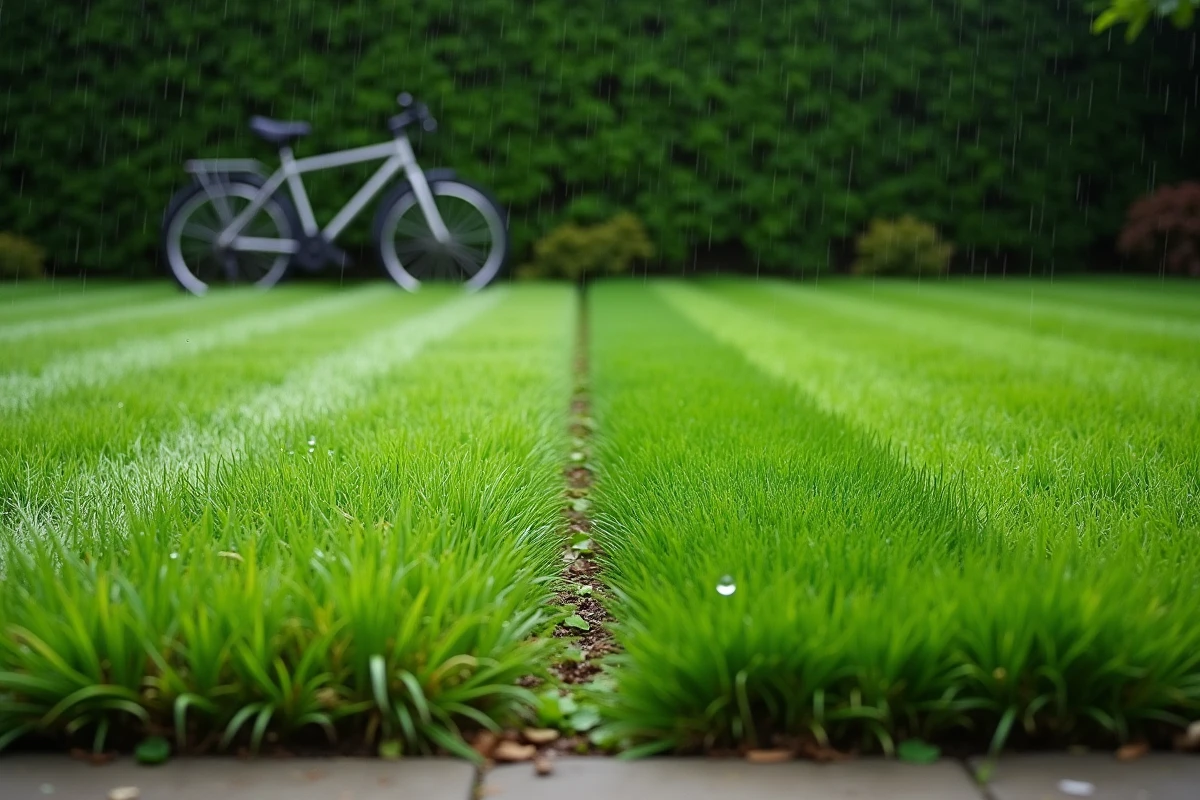
The frequency of mowing changes how the grass withstands rainy episodes. Regularly mowed grass, without removing more than one-third of the height with each pass, develops a denser root system. This root network improves the natural drainage of the soil and reduces the periods when the ground remains unmanageable after rain.
Spacing out mowings often means having to cut more height at once, which weakens the grass at the worst time. During periods of frequent rain, it is better to maintain short and regular passes than to wait for an ideal weather window that may not come.
Adjusting cutting height to the season
In spring, leaving the grass slightly taller than normal protects the soil from the impact of raindrops and limits evaporation between showers. In summer, a more generous cutting height helps the grass withstand the alternating drought-storms that are becoming more frequent in many regions.
The mower blade deserves special attention: a dull blade tears the blades instead of cutting them, regardless of the state of the soil. Checking the blade’s edge at least once per season remains the most cost-effective maintenance gesture for the quality of the lawn.
The choice between mowing before or after the rain ultimately comes down to a question of soil, not timing. A dried-out ground, a sharpened blade, and a reasonable cutting height produce a clean result, whether the downpour passed yesterday or is coming tonight. The grass forgives a lot, except for the passage of a machine on soil that has not finished absorbing.