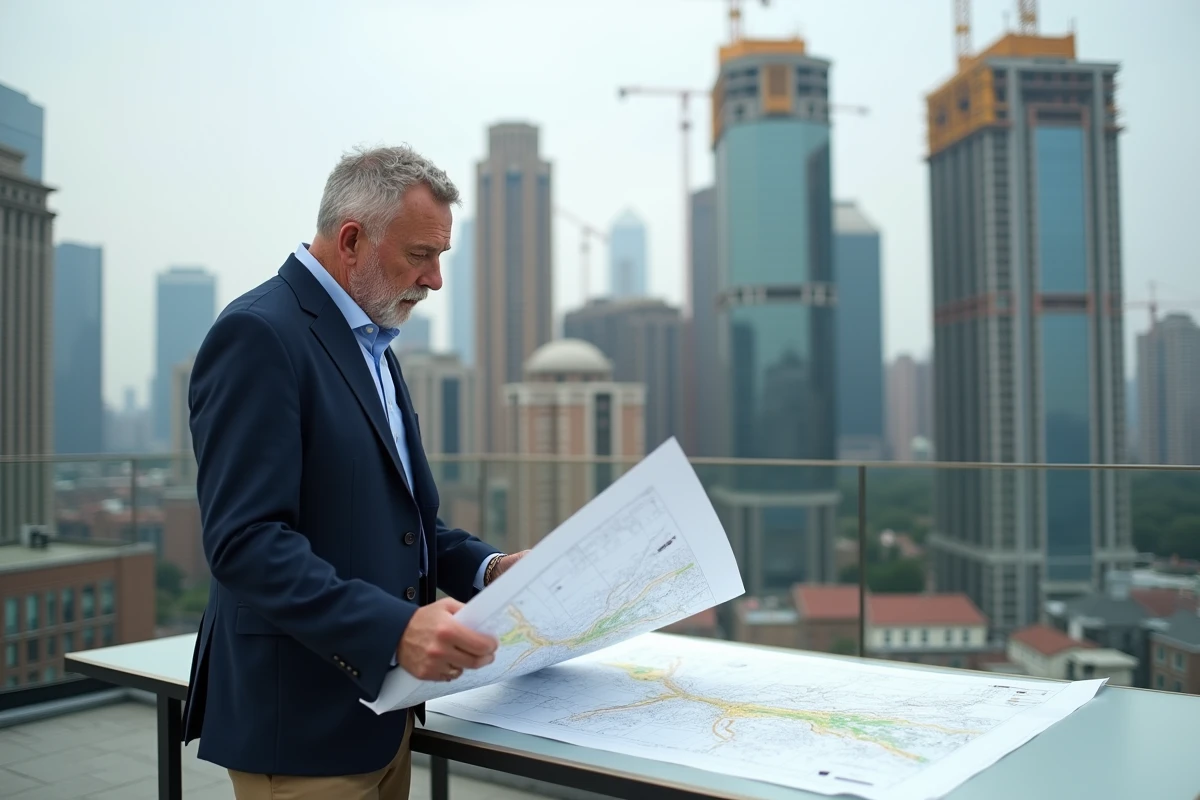
Between 2000 and 2020, the global urban population surged from 2.9 to 4.4 billion inhabitants. This figure, stark and undeniable, tells much more than a simple addition of individuals: it outlines the contours of a global upheaval. Behind this growth, there is no straight line. Some megacities are plateauing, others are soaring, and medium-sized cities are asserting themselves as new centers of gravity. Nothing is set in stone.
The contrasting developments of cities invite us to rethink resource management and access to basic services. When neighborhoods change their face at lightning speed, every decision shapes the local future, but also the global balance. This ongoing reshaping of territories is anything but trivial: it affects the daily lives of billions of people and raises the burning question of urban organization.
Urban growth: understanding a global phenomenon with multiple faces
Behind the generic term of urban growth, three concepts are silently reshaping our daily lives: urbanization, urban density, peri-urbanization. Today, more than half of humanity lives in cities, claims the UN, and this proportion is rising year after year, with 68 to 75% of urban dwellers expected by 2050, if the trend continues. But the movement does not express itself everywhere in the same way. Africa and Asia, shaken by a rapid dynamic, see cities engulfing countryside and villages, disrupting regional balance. Europe, already highly urbanized, is experiencing a gradual stabilization, even a leveling off.
Urban growth transforms much more than the historical centers of cities. It is the entire face of metropolises that is evolving: expanding peri-urban fringes, densifying centers, suburbs hybridizing with the city. Paris provides a striking glimpse, as Île-de-France stacks challenges between densification, continuous expansion, and just-in-time management of the periphery. Other territories, from Bordeaux to Shanghai, show how urban planning and local economic choices chart completely different trajectories.
To better understand this global phenomenon, it is not enough to follow the progression of numbers. The article the definition of urban growth on The Living Web clearly illuminates the workings of the phenomenon: technological innovation feeds off urban vitality, but this dynamic sometimes creates tension on resources, land, mobility, and housing. This new urbanism questions the balance between cities and surrounding territories, disrupts local governance, and forces us to rethink the management of our shared living spaces.
What challenges for cities in full transformation? Social, environmental, and economic stakes
Urban acceleration brings its share of promises, but also pitfalls. Urban centers must absorb new inhabitants every day; public services are pushed to their limits: saturated networks, complex access to housing, explosive demand for medical and educational infrastructure. This pressure creates increasingly visible disparities. Suburbanization, spatial segregation, and the divide between neglected neighborhoods and privileged areas: the city unites, but it also divides.
Another striking phenomenon is urban sprawl. As built space extends, natural areas recede. The artificialization of land progresses, and biodiversity declines. Travel times lengthen, dependence on cars deepens, and air pollution settles in as a fatality. At this rate, development costs rise, and the urban climate becomes strained.
Despite this effervescence, the city remains the economic engine of our societies. The concentration of activities stimulates job creation and innovation. But every coin has its flip side: the proliferation of precarious jobs, the development of the informal economy, and the emergence of neighborhoods built in haste, without an overall plan or real social support. It becomes essential to reconcile economic ambitions, social justice, and ecological demands.
To clarify where the pressure is most strongly felt, three levers stand out today:
- Urban mobility: densification encourages the use of public transport and limits the footprint of individual cars.
- Housing: high demand exacerbates the difficulty of accessing decent housing and fuels tensions in the real estate market.
- Public spaces: their distribution and quality become crucial for rebuilding social ties and improving neighborhood life.
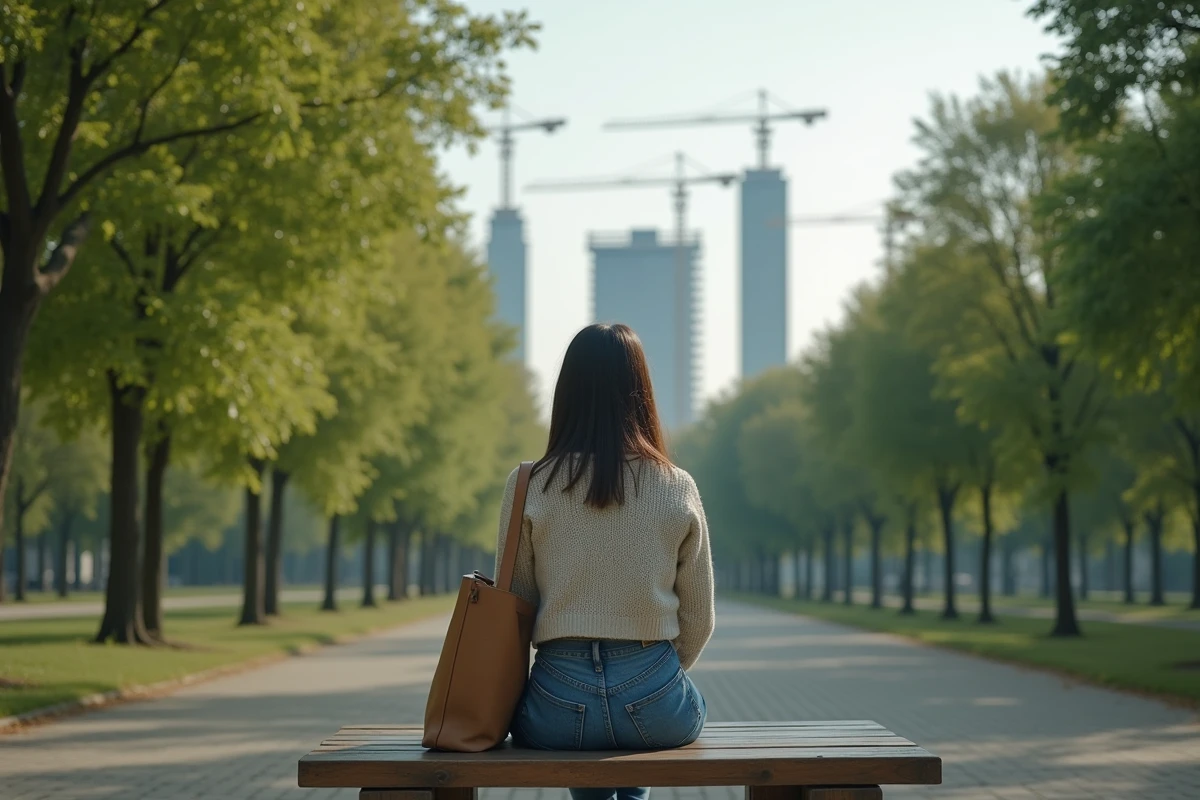
Towards sustainable urbanism: concrete pathways to transform our urban spaces
In the face of this dynamic, urban densification is gradually asserting itself. It relies on efforts in verticality, rehabilitation of brownfields, and better utilization of existing land. The ELAN law has introduced tools to stimulate housing production, encouraging municipalities to plan carefully through PLUi and to adapt their offerings to the reality on the ground.
In tense areas, where square meters are scarce and expensive, mechanisms like the Pinel scheme promote the creation of collective housing to ease a market under severe strain. As density increases, sharing infrastructure becomes logical; public transport, soft mobility, or connected green spaces take on their full meaning.
Spatial organization choices require serious arbitration: ensuring accessibility and quality of life, while curbing space consumption. Balancing functional diversity, designing neighborhoods where housing, commerce, and leisure coexist, helps limit long commutes, offers more local opportunities, and strengthens the social fabric.
To summarize the structuring levers, several parameters make a difference in urban transformation:
- PLU and PLUi lay the foundations for future urban forms, distribute heights, and arbitrate between densification and preservation of green spaces.
- Wise location, diversity of housing types, and management of development and transport expenses guide the intelligent progression of the city.
Transforming the city today requires embracing the idea of a chosen and well-thought-out density: building vibrant neighborhoods, maintaining shared spaces, and fostering dialogue between urban development and nature preservation. Tomorrow, our cities will no longer be quite like those of yesterday; they will bear the imprint of our decisions, our collective bets, and our ability to reinvent this demanding art: living together.