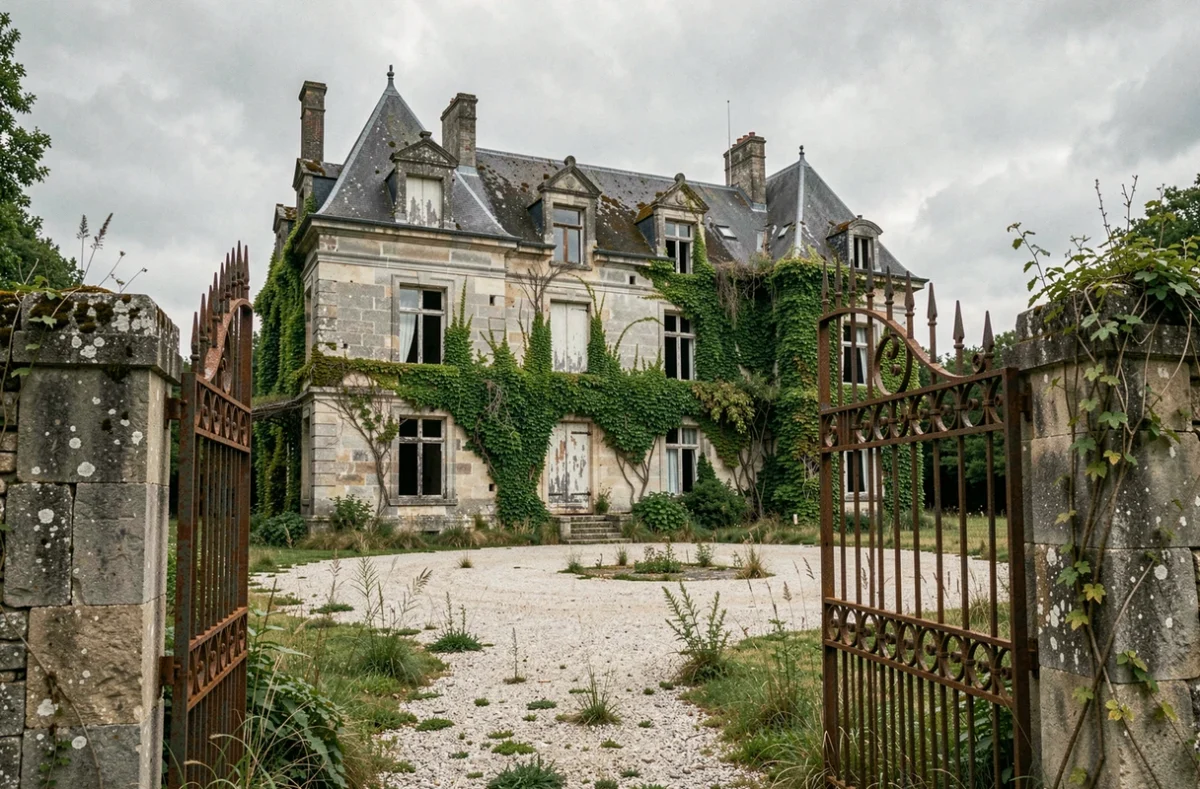
A castle sold for a symbolic euro never truly costs just one euro. The acquisition price conceals a transfer of burdens whose extent often exceeds what an unsuspecting buyer anticipates. Before even considering the heritage or tourism potential of the property, reviewing the protection order, analyzing the title deed, and realistically estimating the overall cost are essential to the project’s viability.
Partial protection perimeter: what the order really covers
A castle listed or classified as a historical monument is not necessarily protected in its entirety. The protection may only target a facade, a roof, or a staircase, leaving the rest of the building outside the regulatory scope. This distinction radically changes the budget: the protected parts require the use of materials and techniques approved by the architect of the Buildings of France, while the unprotected parts fall under common construction law.
Consulting the protection order before making any purchase offer is the only way to know what constraints will apply to the project. We recommend requesting this document directly from the DRAC (regional directorate of cultural affairs) rather than relying solely on the seller’s description.
Another often-overlooked point: work carried out by the previous owner without prior authorization does not disappear with the sale. The buyer inherits the irregularities. If a roof has been redone with non-compliant materials on a classified part, the administration may require restoration at the new owner’s expense. Checking the permits corresponding to interventions already carried out is part of the pre-contractual due diligence.
Before signing a compromise for a castle abandoned for sale for 1 euro, it is therefore necessary to cross-reference three elements: the protection order, the history of work permits, and the ABF report on the monument’s health status.
Title deed and co-ownership: checks before the compromise
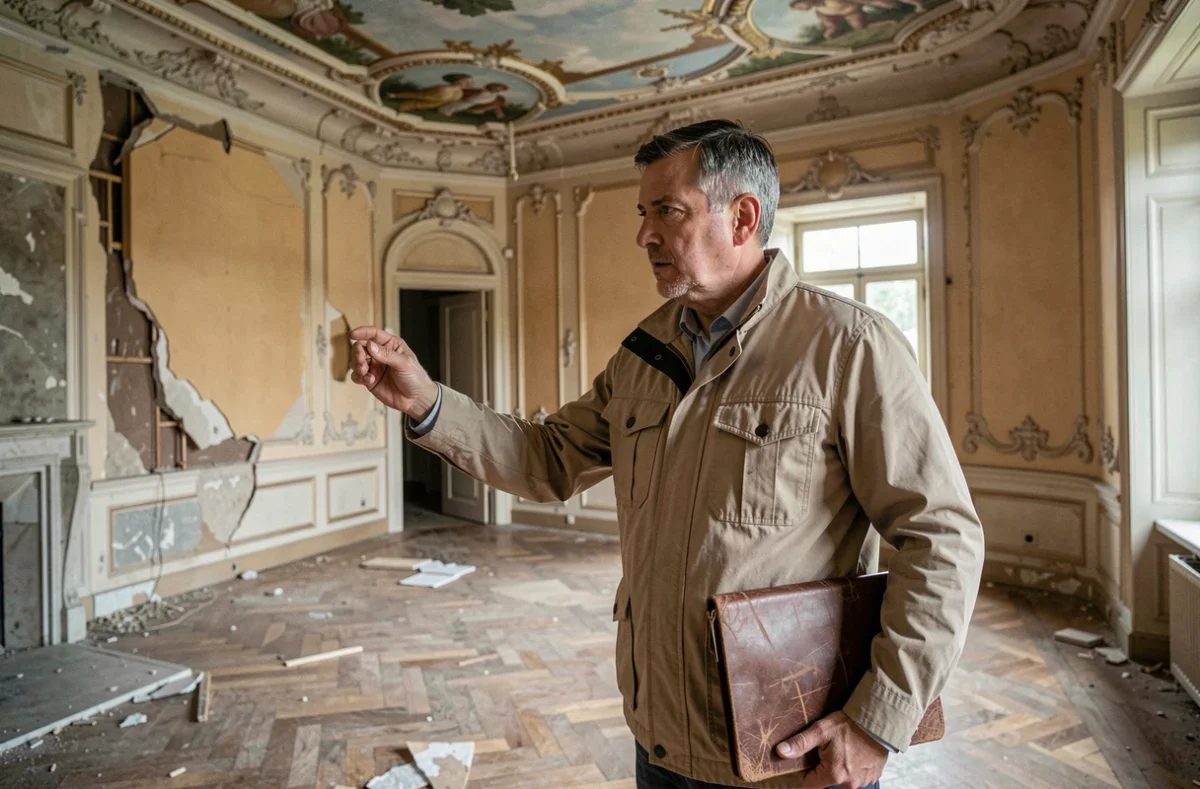
The land situation of a castle abandoned for several decades is rarely clear. Unresolved inheritances generate co-ownership involving dozens of heirs, sometimes dispersed or unidentified. A notary specialized in inheritance law reconstructs the chain of ownership, but the process can take several months.
Beyond co-ownership, it is necessary to search for active easements: rights of way, view easements, occupancy agreements benefiting third parties. On an old estate, these easements are sometimes recorded in notarial deeds over a century old and remain enforceable.
- Request a complete mortgage status report from the land publicity service to identify any registrations, privileges, or potential seizures.
- Demand the production of all transfer deeds since the last opened inheritance to detect any breaks in the chain of ownership.
- Check for the absence of a property without an owner procedure initiated by the municipality, which could render the sale void.
On a property sold for a symbolic price, the seller (municipality, association, heirs) rarely has an interest in financing these searches. The cost of clearing the land therefore almost always falls to the buyer.
Maintenance obligation and formal notice by the administration
Acquiring a historical monument, even for one euro, entails a legal obligation for maintenance. In the event of serious neglect endangering the monument, the administration can formally notify the owner and carry out necessary work at their expense. This mechanism transforms a symbolic purchase into a potentially heavy financial commitment.
The timeline exacerbates the risk. For a classified castle, any construction work (including interior) requires prior authorization, the processing of which takes several months. A buyer wishing to quickly stabilize a structure at risk of collapse may find themselves caught between technical urgency and administrative delay.
This gap between maintenance obligation and the slowness of authorizations constitutes a structural trap. Planning a cash reserve dedicated to emergency conservation work, separate from the overall renovation budget, prevents finding oneself in violation even before the main project starts.
Tax advantages for historical monuments: real conditions for preservation
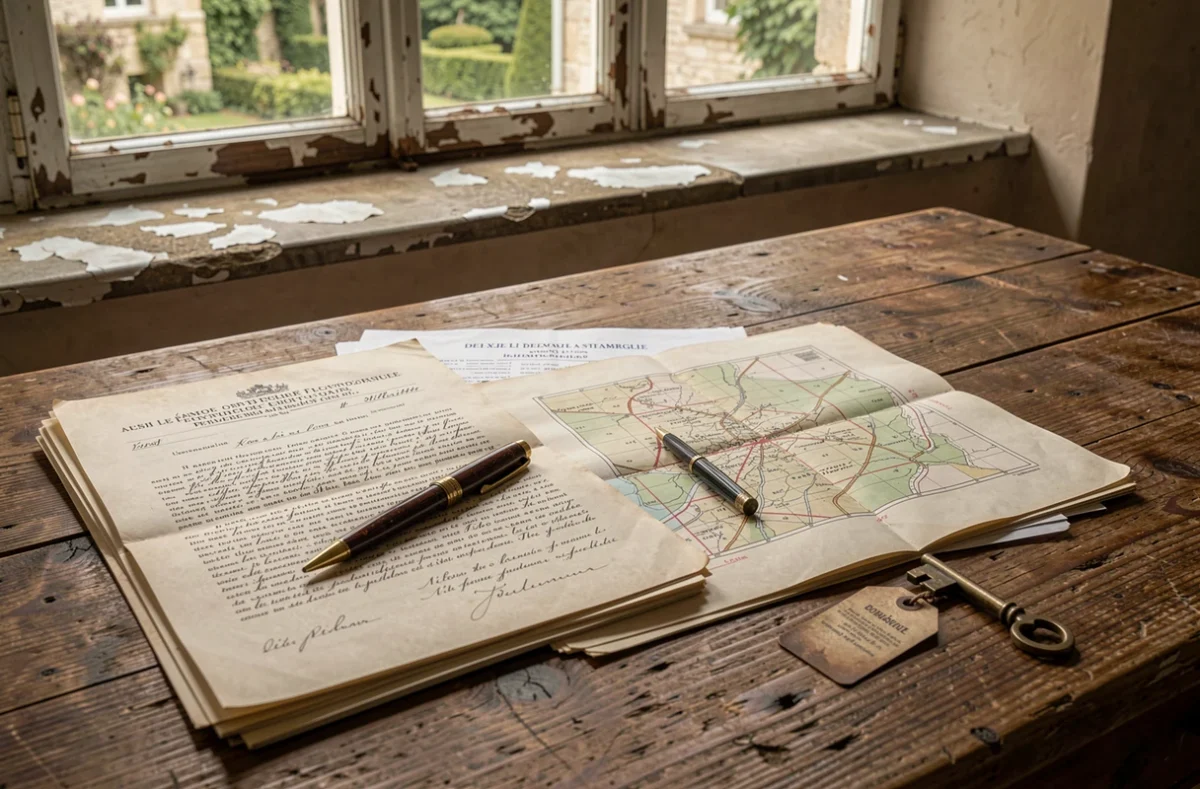
The tax regime for historical monuments allows for the deduction of work expenses from overall income, with no ceiling on tax niches. For a property open to the public, the deduction covers the total restoration expenses. For private use, it is limited to half.
This lever is attractive, but it imposes a minimum duration of preservation for the property. An owner who sells before this period expires loses the benefit of previous deductions and faces a tax reassessment. In other words, tax optimization locks the project in for the long term.
- The deduction covers restoration, maintenance, and repair work, but not expansion or new construction.
- Expenses must be incurred under the supervision of the architect of the Buildings of France for the protected parts.
- Opening to the public, if chosen to benefit from the full rate, requires a minimum number of access days per year and compliant signage.
Before building a financial structure around this regime, we advise validating the scope of eligible work with a tax specialist in built heritage. A discrepancy between planned work and work that is actually deductible can significantly reduce the project’s profitability.
Overall renovation cost of an abandoned castle: order of magnitude
The symbolic purchase price represents a negligible fraction of the total budget. Renovation generally costs several times the acquisition price, sometimes at a considerable ratio. The roof, framework, and waterproofing alone account for a majority share of the work budget.
Additionally, there are electrical upgrades, asbestos or lead remediation (common in old buildings), sanitation, and connection to networks when the castle is located in an isolated rural area. Each item must be independently estimated before signing the compromise.
A structural diagnosis carried out by a specialized firm in old buildings remains the only reliable means of assessing the extent of necessary underpinning work. Standard property diagnostics (DPE, termites, electricity) are insufficient to cover the specific pathologies of old masonry, pile foundations, or large-span solid wood frameworks.
Acquiring an abandoned castle for a symbolic euro is more of a long-term heritage project than a real estate opportunity. The displayed price is a lure. The viability of the project hinges on the quality of the preliminary checks, the management of the administrative timeline, and the robustness of the financing plan for the work.