
On a a Monday morning, we grab a bag that’s too small to fit our laptop. The scarf tied the night before ends up wrinkled at the bottom of a pocket. The watch, too dressy for the office, stays in its box. We’ve all experienced that mismatch between an accessory that looks great in the store and one that can handle a whole day, from the commute to an impromptu dinner.
The true criterion for selecting a fashion accessory is not its isolated beauty, but its ability to function within the constraints of a real day. This angle is what most buying guides lack.
Accessories from morning to night: the three-context test
Before adding a piece to our wardrobe, we can put it through a simple filter: does it pass the office, the urban commute, and an evening outing without needing to be changed? If the answer is yes, the accessory deserves its place.
A structured medium-sized bag illustrates this principle well. Sturdy enough to protect a laptop or documents, understated enough for a professional meeting, it remains presentable in the evening at a restaurant. Conversely, a clutch fails at the first context: it doesn’t carry anything useful for daily life.
To browse the accessories available on Mode For You, this three-context filter helps quickly sort what will actually be useful from what will end up forgotten in a drawer.
This reasoning also applies to jewelry. A discreet fine chain necklace works on a turtleneck as well as on a neckline, which is not the case for a bulky statement piece reserved for a single outfit configuration. Versatility is not an aesthetic compromise; it’s a practical requirement.
Bag, watch, belt: three accessories that solve a concrete problem
We often talk about accessories to “elevate a look.” In practice, the pieces we wear the longest are those that fulfill a specific function in addition to adding style.
The modular bag for hybrid days
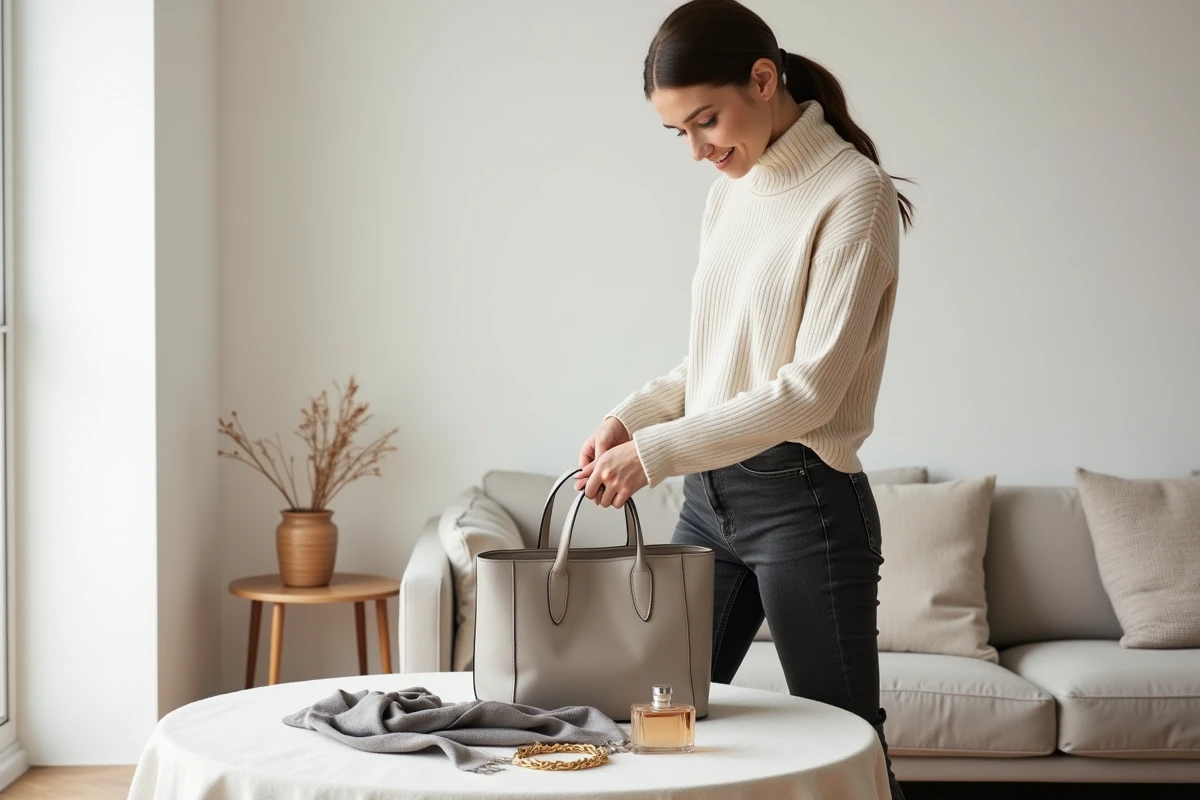
Hybrid work has changed the game. We go from the office to a café, then to a sports class. Modular bags (with removable compartments, adjustable straps, or expandable formats) respond to this back-and-forth without sacrificing style. A pebbled leather tote bag, for example, remains elegant while holding a notebook, a water bottle, and a pencil case.
Opinions vary on this point: some find modular bags too bulky once folded. The best approach is to test the format empty before buying.
The watch as a readable style accessory
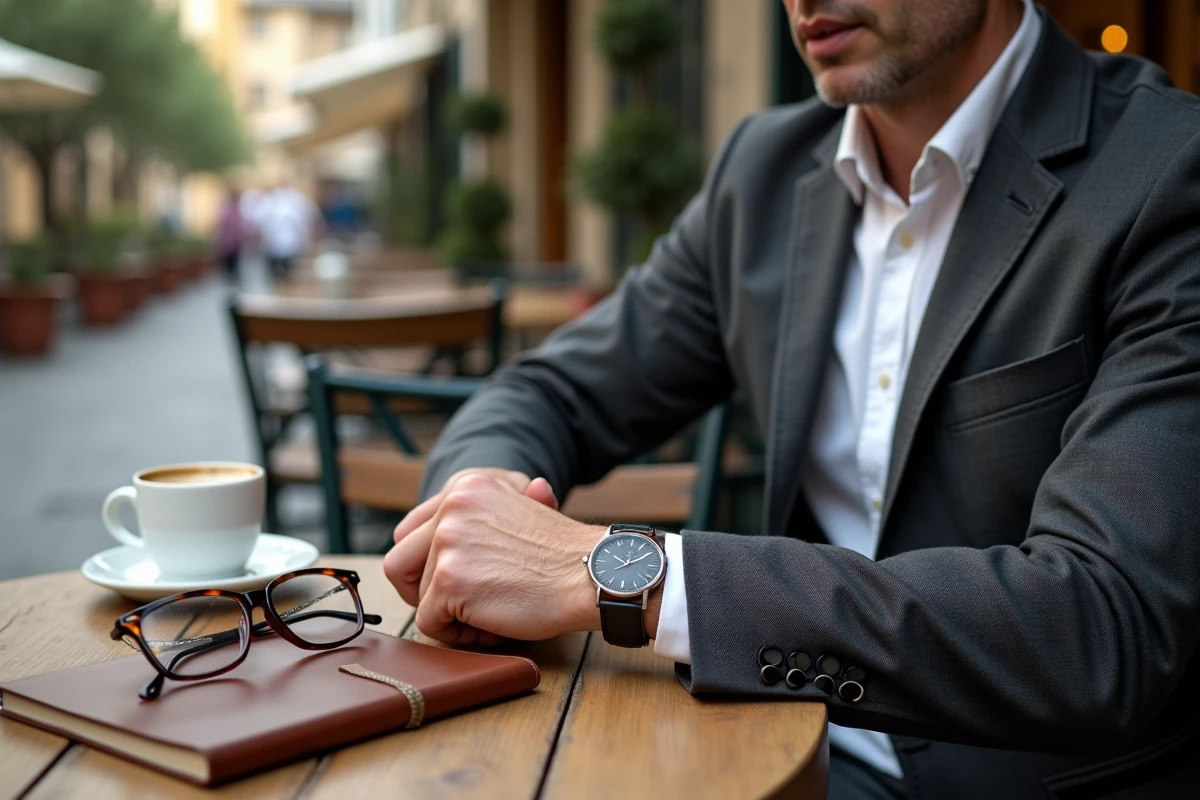
A watch with a clean dial and interchangeable strap covers most situations. Leather strap for a formal context, textile or mesh strap for the weekend. You can switch styles in thirty seconds without multiplying pieces. Discreetly designed smartwatches are also starting to fit into this logic, although their aesthetics remain a notch below a classic case.
The belt: structuring the silhouette without thinking
A medium-width leather belt (neither too thin nor too wide) goes well with jeans, tailored pants, or a dress. Choosing a simple buckle allows it to be worn with any style without drawing excessive attention. It’s a discreet investment that lasts for years when the leather is of good quality.
Scarf and sunglasses: underestimated accessories in everyday life
The scarf suffers from a dated image. Yet it is one of the few accessories capable of radically transforming a neutral outfit. Tied around the neck, tucked into a jacket collar, or attached to a bag handle, it adds color and texture without being cumbersome.
In natural materials (cotton, linen, fine wool depending on the season), a scarf also offers a real thermal function. You keep it around your neck in an air-conditioned office, and remove it on the terrace. It’s a truly hybrid functional accessory.
Sunglasses deserve the same attention. Many people buy a pair on impulse, without checking if the shape suits their face shape. A few guidelines help avoid mistakes:
- Round face: favor angular frames (rectangular, cat-eye) to create contrast and elongate features.
- Square face: opt for rounded or oval shapes that soften the jawline.
- Oval face: most shapes work, but frames proportionate to the width of the forehead remain the most harmonious.
- Heart-shaped face: lightweight frames, like aviators or rounded styles, balance the lower part of the face.
Glasses that suit your morphology change a look more than poorly chosen jewelry. You wear them for hours every day outdoors, making them the most visible accessory in the summer wardrobe.
Choosing durable accessories rather than trendy ones
The temptation to buy an accessory just because it’s everywhere on social media often leads to a cluttered closet. Accessory trends change quickly: a bag model that’s ubiquitous one season can look dated six months later.
Investing in quality materials and simple shapes ensures a much longer aesthetic lifespan. A solid silver bracelet doesn’t go out of style. A full-grain leather bag ages beautifully over time instead of deteriorating. A pair of understated geometric earrings effortlessly transcends the seasons.
Here are some concrete criteria to assess the durability of an accessory:
- Finishes: regular stitching, sturdy clasps, absence of visible glue on jewelry.
- Weight: a piece that’s too light often indicates a low-quality alloy that tarnishes or chips.
- Modularity: an accessory that can be worn in multiple ways (scarf, convertible bracelet, bag with removable strap) justifies its purchase better.
You don’t build a style with an accumulation of pieces. Three or four well-chosen accessories cover nearly all daily needs. The rest is a bonus, not a necessity. The most useful accessory is the one you grab every morning without thinking, because it works with everything you wear and everything you do.