At a time when animated videos are flooding our screens and brands are competing for creativity to capture attention, one reality stands out: motion design is no longer an option, it is a trump card. Mastery of graphic animations has now become a sought-after skill in the fields of communication, marketing, and audiovisual. Some professions require a technical and creative versatility that is rarely achieved without structured support. Companies value expertise gained from specialized training centers, which ensure the acquisition of up-to-date skills.
Obtaining a recognized certification or diploma allows for quicker access to qualified positions and the possibility of sustainable career advancement. The demand for trained profiles has never been stronger, fueled by the rise of animated digital content.
Motion design, a creative profession in full expansion
Motion design now holds a prominent place in visual and digital communication. Companies, agencies, studios: all are looking for specialists capable of animating texts, shapes, and illustrations to create videos that leave a lasting impression. This profession relies on a range of skills that leaves no room for improvisation: storyboarding, 2D or 3D animation, compositing, animated typography, and sometimes a touch of sound design. The playgrounds are plentiful: advertising, educational content, corporate videos, video mapping.
The sector is advancing rapidly. Opportunities are multiplying in digital communication, advertising, audiovisual, web, and e-learning. Motion designers integrate into communication agencies, creative studios, audiovisual production companies, or invest directly in streaming platforms. Some choose independence as freelancers, while others prefer salaried positions or start their own structures, from micro-entrepreneur status to SASU format.
This profession offers promising prospects. After a few years of practice, experienced profiles move towards positions as art directors, lead motion designers, or VFX specialists. The bridges to roles such as digital project manager or consultant are very real. It is a universe where the diversity of missions, technical demands, and the strength of animated graphic design create an environment that is as stimulating as it is demanding.
This market dynamic is accompanied by a high demand for training. The Kömal motion design training center offers a structured program, accessible from the high school level and leading to state-recognized titles (RNCP level 6), to approach these rapidly evolving professions.
What skills and tools are essential for success in motion design?
To master motion design, one must skillfully juggle creativity, technique, and precision. This profession requires the ability to blend graphic design and animation, weaving visual narratives while adhering to professional rigor. Specialized training relies on learning essential tools that have become the backbone of the profession.
Here are the software tools that industry professionals rely on:
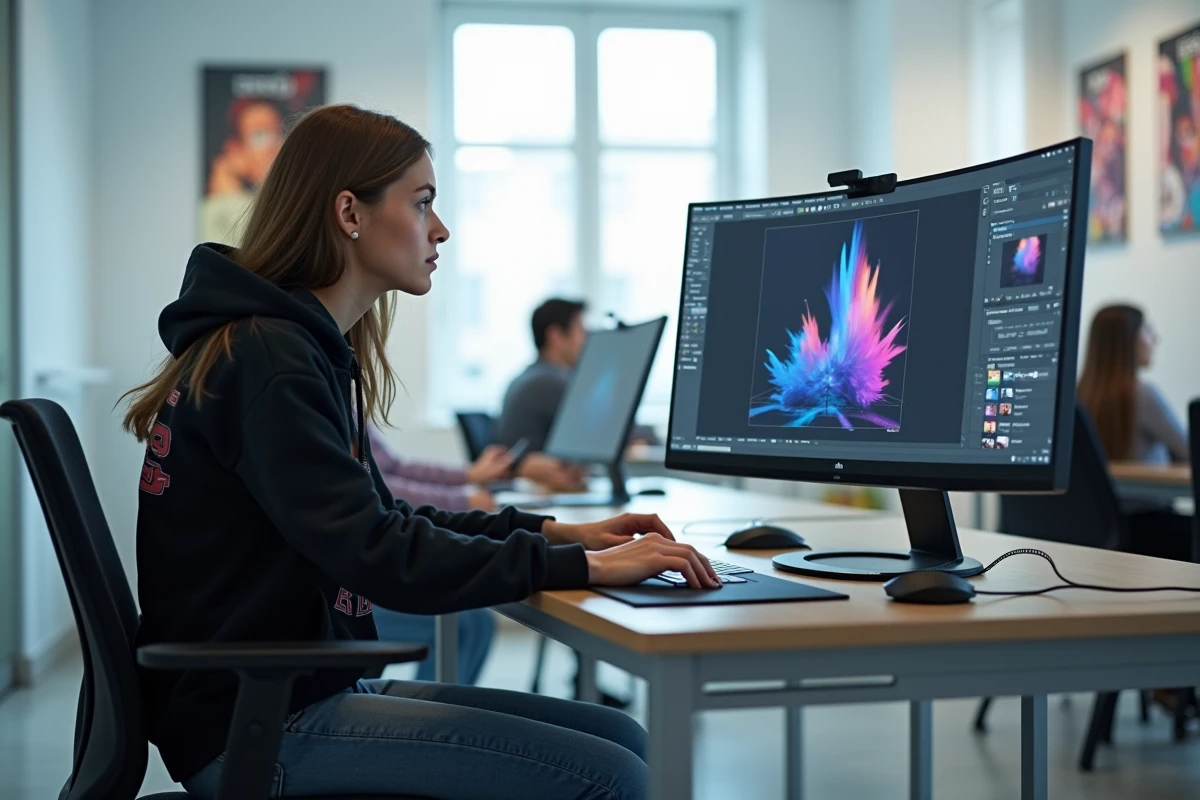
- After Effects: the reference for 2D animation, compositing, and post-production. This tool brings graphic elements to life and allows for creating impactful transitions.
- Cinema 4D and Blender: for exploring 3D animation, modeling volumes, creating advanced renders, or working on video mapping.
- Photoshop and Illustrator: essential for creating and retouching visuals used in motion design animation projects.
- Premiere Pro: editing, color grading, and final export go through this software, which complements the production process.
A motion designer must also build a convincing portfolio, a true business card showcasing their achievements and creativity. Continuous monitoring of software developments, openness to innovations like artificial intelligence, and the ability to manage a project from start to finish are sought-after qualities.
Graphic designer, animator, editor, project manager: specialized training shapes versatile profiles capable of collaborating with all members of a creative team. Project management and the ability to work collaboratively are becoming increasingly important in a sector where technical innovation keeps pace with visual imagination.
Training in a specialized center: a springboard to becoming a professional motion designer
Choosing a specialized training center means opting for learning in real-world contexts, designed to meet market expectations. This program is built around practical workshops, interventions from active professionals, and concrete projects. Mastery of motion design is not acquired through pure theory but through practice, facing tools, constraints, and quality demands.
This type of training is aimed at creative profiles determined to invest time and energy in mastering software, animation, and graphic design. From the high school diploma, several pathways exist: bachelor’s, master’s, RNCP title. These national diplomas, awarded under the auspices of the state, open the door to careers in agencies, studios, audiovisual producers, or as independents.
Various arrangements promote the diversity of pathways:
- Alternation: immediate immersion in a company, with a sustained rhythm between learning and field experience.
- Initial or continuing education: gradual acquisition of skills, building a solid portfolio, and obtaining certifications such as TOSA Illustrator or RS6887.
- Financial support may be available through CPF, France Travail, OPCO. The centers extend their accessibility to people with disabilities.
Upon completion, the motion designer has a foundation of experience, a professional network, and a refined vision of the field. Educational support, validation through recognized certifications, and assistance towards employment constitute the strength of these centers: true springboards for tomorrow’s talents.
Tomorrow, every animated pixel will tell a story. Yours could very well be the next to shape imaginations.