Few people truly understand what the conversion of fiscal horsepower to DIN horsepower is. This somewhat technical term is essential for anyone interested in automobiles. Whether you are a car enthusiast, a potential buyer, or simply curious, the conversion of fiscal horsepower to DIN horsepower is a concept you should know. This knowledge will allow you to better understand a vehicle’s power, assess its performance, and make a more informed choice when purchasing a car. So, fasten your seatbelt and get ready to dive into the world of converting fiscal horsepower to DIN horsepower.
The origins of the conversion from fiscal horsepower to DIN horsepower: a long-awaited reform
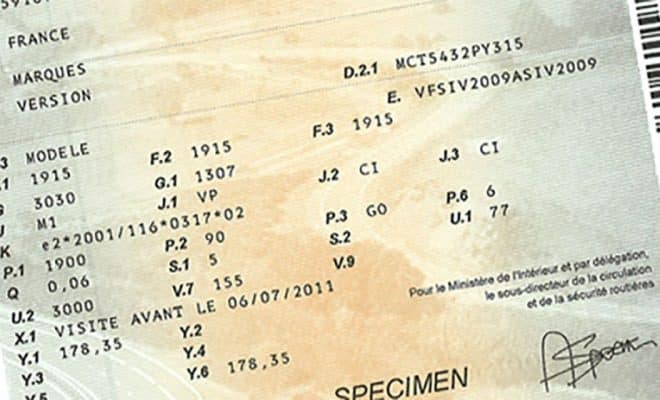
To fully understand the process of ‘converting fiscal horsepower to DIN’, it is essential to identify the exact number of fiscal horsepower assigned to your vehicle. This crucial element can be found in the section dedicated to technical specifications on your registration certificate, more specifically under the heading ‘Fiscal Power‘.
Once this value is established, you must proceed with two distinct conversions to arrive at a final conversion of ‘fiscal horsepower to DIN’. The first step involves converting your fiscal horsepower (CV) to kilowatts (kW). It is important to note that the type of engine • gasoline or diesel • plays a major role in this calculation, as each type has its own specific coefficient.
Once this first transformation is completed and a value is obtained explicitly in kW, the final step to ‘convert fiscal horsepower to DIN’ can be taken. This simply involves multiplying these kW by 1.36 • this is the equivalent between one kilowatt and one DIN horsepower.
For example, if we take a vehicle with 6 CV:
• The conversion from CV to kW gives: 6 x corresponding coefficient (depending on the type of engine) = X kW.
• Then, to convert these values obtained in kW to DIN horsepower: X kW x 1.36 ≈ Y DIN horsepower
By carefully following each of the steps explained above to ‘convert fiscal horsepower to DIN’, you will discover that your car has approximately ‘Y’ DIN horsepower.
Understanding how to convert your own native measurement units according to an international standard not only provides a clearer view of your vehicle’s actual performance but also significantly facilitates comparisons when expressed in different national units.
How to calculate the conversion of fiscal horsepower to DIN horsepower: a revealed method
The conversion of fiscal horsepower to DIN horsepower has a significant impact both on the vehicles themselves and on the fiscal level. It is important to understand that the actual power of a vehicle’s engine is reflected by DIN horsepower rather than fiscal horsepower.
By converting fiscal horsepower to DIN, a more accurate estimate of the engine performance is obtained. This allows drivers to make informed decisions when choosing their car based on their specific needs. For example, a driver looking for a car with quick acceleration might be more interested in the power expressed in DIN horsepower rather than in CV.
This conversion can also impact the cost of car insurance. Generally, the higher the number of DIN horsepower, the more expensive the insurance will be. Insurance companies often use this measure to determine the level of risk associated with a given vehicle.
From a fiscal perspective, the conversion of fiscal horsepower to DIN can also play an important role. In some countries, notably France, the annual tax imposed on car owners depends on the number of fiscal horsepower assigned to the vehicle. By performing this conversion to DIN horsepower, it is possible that certain cars may fall into a higher or lower category when it comes to the amount to be paid for this annual tax.
It is crucial to emphasize that the conversion of fiscal horsepower to DIN does not actually change the power of a vehicle’s engine. It simply allows this power to be expressed more accurately according to an international standard.
Understanding and performing the conversion of fiscal horsepower to DIN can have a significant impact on vehicles and taxation. It offers drivers a better understanding of their car’s actual performance while also influencing insurance costs and annual taxes. Therefore, this conversion should be taken into account when evaluating one’s own automotive situation.
Conversion of fiscal horsepower to DIN horsepower: what impact on vehicles and taxation
When it comes to converting fiscal horsepower to DIN horsepower, a few precautions should be taken to obtain a precise and reliable estimate. Here are some tips to optimize this conversion:
Use the right conversion tool: There are several online tools that allow you to easily convert fiscal horsepower to DIN horsepower. Choose a reputable and reliable tool to obtain accurate results.
Check the technical specifications of the vehicle: Before proceeding with the conversion, ensure you have access to the detailed technical specifications of the vehicle in question. This information is often available in the owner’s manual or on the official website of the car manufacturer.
Take into account the year of manufacture: Engine power evolves over the years with technological advancements. It is important to consider the exact year of manufacture when converting fiscal horsepower to DIN horsepower.
Consider any modifications made to the engine: If you have made modifications to your engine such as adding a turbo kit or electronic reprogramming, it is advisable to take this into account during the conversion to obtain a more accurate estimate.
Consult a professional if necessary: If you encounter difficulties or wish to obtain in-depth expertise, do not hesitate to consult a professional in the automotive field. An experienced mechanic can help you perform the conversion accurately.
By following these tips, you can optimize the conversion of fiscal horsepower to DIN horsepower and obtain a more reliable estimate of your vehicle’s actual power. This will allow you to make informed decisions when it comes to buying or insuring a car, while also complying with current tax regulations.
Optimizing the conversion of fiscal horsepower to DIN horsepower: our practical tips
Choosing an appropriate car insurance is essential for any vehicle owner. When you take out insurance, the engine power in DIN horsepower plays a determining role in the calculation of premiums. The conversion of fiscal horsepower to DIN horsepower thus allows for the precise determination of the vehicle’s actual power and therefore the setting of a corresponding premium.
It is important to note that the regulations regarding this conversion can vary from country to country. In some countries, there is a specific mathematical formula that allows for the conversion of fiscal horsepower to DIN horsepower. This formula generally takes into account factors such as the weight of the vehicle, its mechanical architecture, and its overall performance.
In France, for example, the conversion of fiscal horsepower to DIN horsepower is done according to a standardized equivalence: 1 fiscal horsepower corresponds to approximately 0.736 kW (kilowatt) or 0.986 DIN horsepower. This means that a car with an administrative power of 5 horsepower will have an estimated actual power of around 3.68 kW or about 4.93 DIN horsepower.
It is important to emphasize that this estimate remains indicative and does not necessarily represent the actual performance of the engine accurately. Indeed, several other elements can influence an engine’s performance, such as its technology (gasoline or diesel), its displacement, or its injection system.
Therefore, it is recommended for motorists who wish to obtain an accurate estimate of their vehicle’s actual power to consult the technical files provided by car manufacturers. These documents detail the specific characteristics of the engines, allowing for a more precise idea of their performance.
Understanding the conversion of fiscal horsepower to DIN horsepower is essential for any vehicle owner wishing to obtain a precise and reliable assessment of the engine’s actual power. Thanks to this conversion, it will be possible to adjust car insurance according to the vehicle’s power level and thus ensure coverage tailored to specific needs.