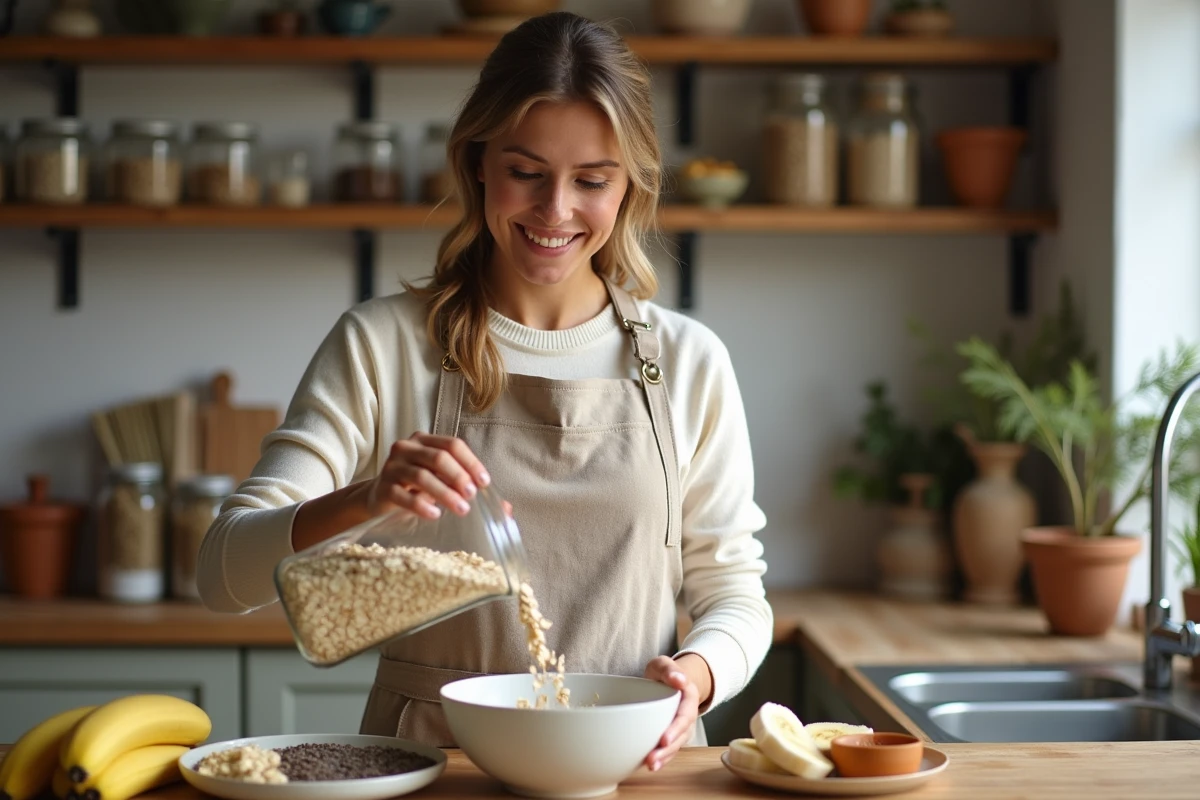
Your oats often stay at the back of the cupboard, reserved for morning porridge. However, blending oats opens up a much wider range of textures and uses: quick flour for pancakes, plant-based binder for croquettes, creamy base for a smoothie. It is essential to adjust the grind to the desired result, as blending too short or too long radically changes the final texture of your preparation.
Choosing the right grind before blending your oats
You may have noticed that the same packet of oats can sometimes yield a grainy paste and other times a smooth cream? The difference rarely lies in the brand. It depends on the blending time and the type of oats used.
Thick oats (like “large flakes”) resist the blades more. They retain pieces even after several seconds of blending, which is suitable for pancakes where crunch is desired. Fine oats, precooked longer in the factory, pulverize quickly and produce a very fine homemade oat flour in less than thirty seconds.
To learn how to blend oats according to the intended recipe, remember a simple principle: blend in short five-second bursts, check the texture between each burst, and stop as soon as the grain suits you. Blending “to the max” produces a compact powder that absorbs too much liquid and weighs down the batter.
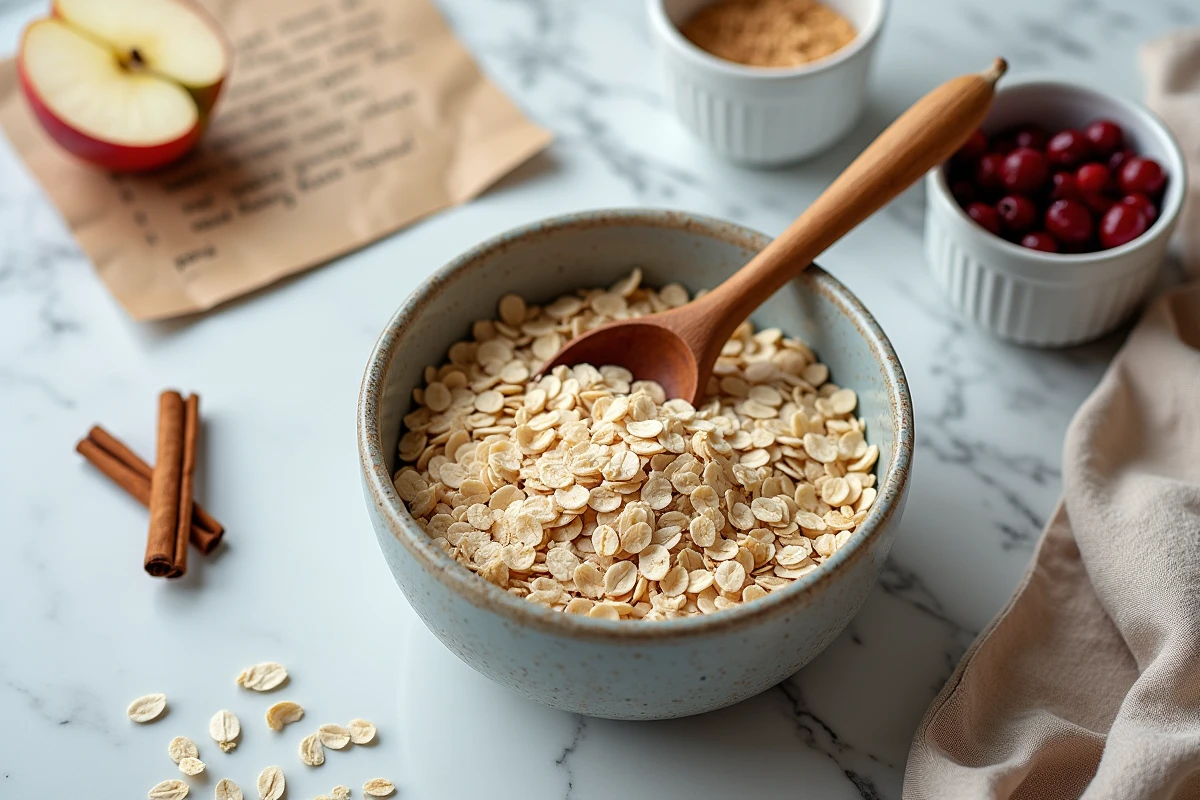
Blending oats to replace wheat flour in your recipes
Transforming your oats into flour requires only a blender or a standard mixer. The result replaces part of the wheat flour in most sweet and savory recipes, with a significantly higher fiber content.
Substitution ratio and texture
You do not replace wheat flour by equal volume. Blended oat flour absorbs more liquid than wheat flour. If your recipe calls for a cup of wheat flour, start with three-quarters of a cup of oat flour, then adjust by adding liquid (milk, water, applesauce) until you achieve the desired consistency.
A often overlooked point: oat flour does not contain gluten in the baking sense. It does not rise in the same way. In a fluffy cake, this is not a problem. For leavened bread, limit the substitution to one-third of the total flour, with the rest remaining wheat or spelt.
Intentional graininess or ultra-fine powder
Cookies and pancakes benefit from maintaining a mix of textures: half finely blended and the other half left as whole flakes. This technique gives body to the batter without making it gummy. In recent practical nutrition trends, this method also serves as a plant-based binder for croquettes or veggie burgers, combining blended oats, brown rice, and an egg.
Blended oats in savory recipes: pancakes and croquettes
Oats are not just for sweet dishes. Blended to varying degrees, they replace breadcrumbs or sandwich bread in savory preparations.
- For vegetable pancakes, mix coarsely blended oats with grated zucchini, an egg, and a pinch of salt. Cook in a skillet with a drizzle of oil for a few minutes on each side.
- For crispy croquettes, use fine oat flour as an outer coating and whole flakes in the filling. The contrast between the golden shell and the tender inside makes all the difference.
- To thicken a soup, add a tablespoon of finely blended oats at the end of cooking. They dissolve in a few minutes and provide a velvety texture without cream or potatoes.
Blended oats also work as a binder in a veggie burger. The key is not to reduce everything to powder: keep visible fragments to avoid a too compact consistency in the center.
Preparing sweet recipes with blended oats without weighing down the batter
An oat flour pancake can be airy or turn into a rubbery disc. The difference is made upstream, at the time of blending and resting the batter.
Pancakes and crepes with oat flour
Blend the oats until you achieve a smooth powder, without large pieces. Mix with an egg, milk (plant-based or not), and a pinch of baking powder. Let the batter rest for about ten minutes. This rest allows the beta-glucans (the soluble fibers in oats) to gradually absorb the liquid, resulting in fluffy pancakes that do not collapse during cooking.
Add fresh fruits (mashed banana, blueberries) directly into the batter rather than as a topping. The natural sugar from the fruits reduces the need for added sugar.
Cookies and energy bars
For cookies, the double mixing rule applies: half fine oat flour, half whole flakes. Add a fat (coconut oil, almond butter) and a moist binder (applesauce, banana). Form balls, flatten them, and bake until golden brown.
Energy bars work without baking. Coarsely blend the oats, mix with dried fruits, honey, and seeds, press into a mold, and place in the refrigerator. The result holds well when cut thanks to the binding power of blended oats.
Cadmium in oats: should you worry about your homemade recipes
An investigation by 60 Millions of Consumers published in 2023 highlighted the presence of cadmium in commercial oats, including organic brands. Cadmium is a heavy metal naturally present in soils, which the plant absorbs during its growth.
Good news for homemade recipe enthusiasts: the same investigation emphasizes the absence of detectable pesticide residues in most oats tested in France. Oats remain a comparatively clean cereal in terms of chemical treatments.
The experts’ recommendation is simple: vary your cereals. Alternating oats with buckwheat, brown rice, or spelt in your recipes limits exposure to cadmium while diversifying nutritional intake. Blending oats for your pancakes or pancakes remains entirely relevant, provided you do not make it the sole base of every meal.