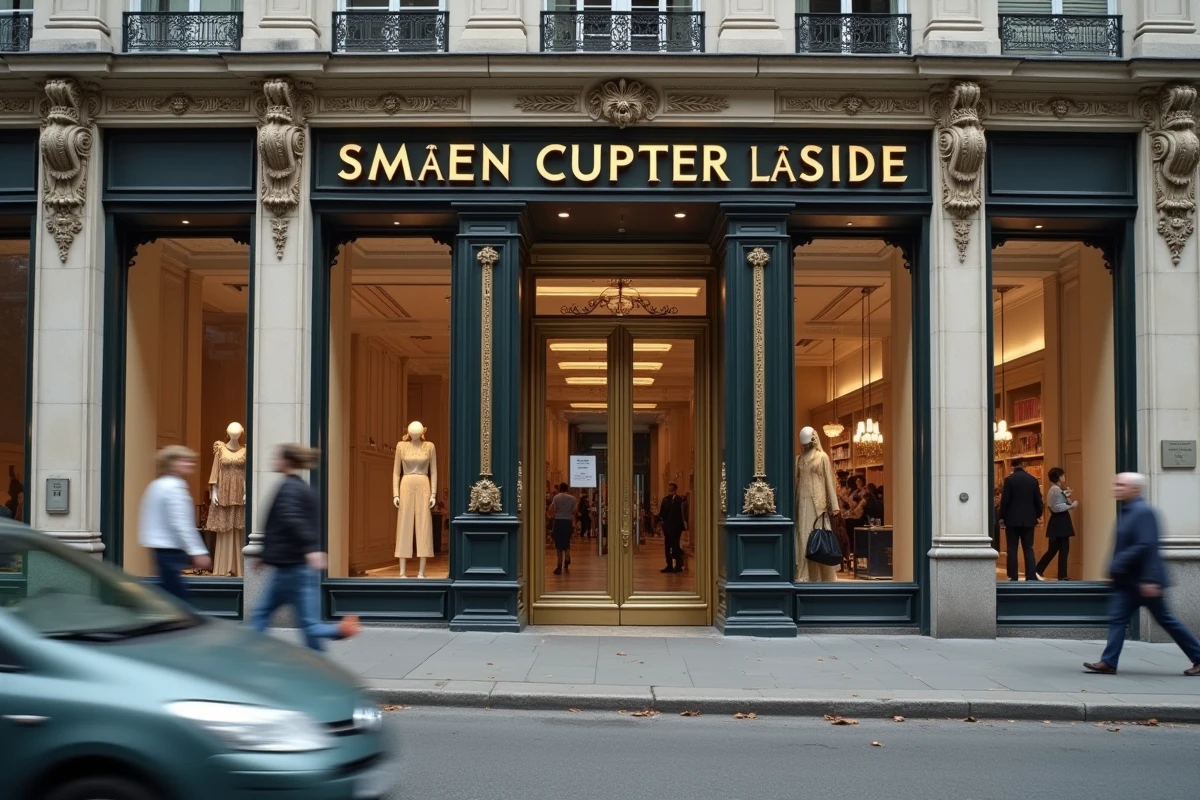
The Galeries Lafayette group has gone through a tumultuous judicial and commercial phase since the beginning of 2024. Several dozen stores, mainly located in medium-sized cities, have come under the spotlight following the opening of safeguard procedures targeting the operating companies. The issue goes beyond a simple list of closures: it touches on the very structure of the network, divided between owned stores and franchised outlets with diverging fates.
Integrated and franchised Galeries Lafayette stores: two distinct legal realities
The most widespread confusion in the media coverage of this matter stems from the amalgamation of stores owned by the Galeries Lafayette group and those operated under the brand by third-party companies. The owned stores, managed directly by the parent company, are not affected by the safeguard procedures opened in 2024.
The targeted outlets mostly belong to companies linked to businessman Michel Ohayon, notably the entities HPB and GLF grouped under the Hermione Retail brand. These structures operate the stores under franchise or affiliation agreements, meaning they use the Galeries Lafayette brand without being owned by the eponymous group.
The direct consequence: when a franchisee defaults, the commercial site does not automatically disappear. It can be taken over by another operator, change its brand, or be subject to a continuation plan approved by the commercial court. Consulting the list of stores affected by the closure of Galeries Lafayette allows one to visualize the geographical scope of the phenomenon, but each local situation follows its own judicial path.
Continuation plan 2024: what the commercial court has actually decided
In spring 2024, the commercial court approved a continuation plan for several stores managed by Michel Ohayon’s subsidiaries. This decision, reported notably by Sud Ouest, changes the game for some of the outlets that were on the closure lists announced a few months earlier.
A continuation plan is not a definitive rescue. It imposes a schedule for debt repayment and commitments to maintain activity over several years. If the operator fails to meet these commitments, the court can convert the procedure into judicial liquidation.
However, as long as the plan is respected, the affected stores remain open and employees keep their jobs. Several provincial cities that were already facing the loss of their store have thus received a reprieve, the duration of which depends on the franchisee’s ability to turn their finances around.
What the continuation plan concretely implies
- Creditors agree to a staggered repayment of the debt over several years, which alleviates short-term cash flow pressure for the operator.
- The court appoints a commissioner to oversee the execution of the plan, monitoring compliance with financial and operational commitments.
- In case of default, conversion to judicial liquidation can occur at any time, leading to the effective closure of the outlet.
The available data does not allow for a conclusion that all stores placed under a continuation plan will survive over the next two or three years. The commercial context for ready-to-wear in city centers remains tense, and foot traffic at several affected sites was already declining before the procedure.
Confirmed Galeries Lafayette closures: the cities losing their store
Among the twenty stores initially threatened, some closures have been confirmed without ambiguity. The case of Marseille has received the most media attention: the Galeries Lafayette in Marseille has confirmed its closure, with management citing an untenable economic situation.
Other medium-sized cities have seen their stores close or initiate liquidation procedures. The common thread among these closures lies in the combination of several local factors.
- A sustained decline in foot traffic in city centers, exacerbated by competition from peripheral commercial zones and online shopping.
- Commercial leases that had not been renegotiated for several years, weighing on the site’s profitability.
- The absence of a credible local buyer capable of maintaining a large general store in a contracting ready-to-wear market.

Takeover or rebranding: the aftermath of closures in affected cities
The closure of a Galeries Lafayette store does not always mean the end of the commercial site. In several cities, negotiations have been initiated to find a buyer or transform the location into another distribution format.
The franchisee’s default opens the door to local takeovers or the establishment of different brands. This scenario depends on the size of the premises, its location, and investors’ appetite for physical retail in the concerned city.
Some sites occupy heritage buildings in the city center, the conversion of which into offices or housing would require heavy renovations and complex urban planning approvals. Maintaining a commercial activity often remains the quickest solution, even under a less prestigious brand.
The role of local authorities
Several municipalities have publicly taken a stance to facilitate the takeover of the sites. The tools at their disposal remain limited: preemption of the commercial lease, fiscal support for the buyer, or integration of the site into a downtown revitalization program. No local authority can force a private operator to take over a loss-making store, but the political signal weighs in negotiations.
The Galeries Lafayette case illustrates a broader tension between the financial logic of retail groups and residents’ attachment to their city center shops. The stores that will survive will be those whose franchisee has found a viable economic model in their local market, regardless of the brand’s notoriety.