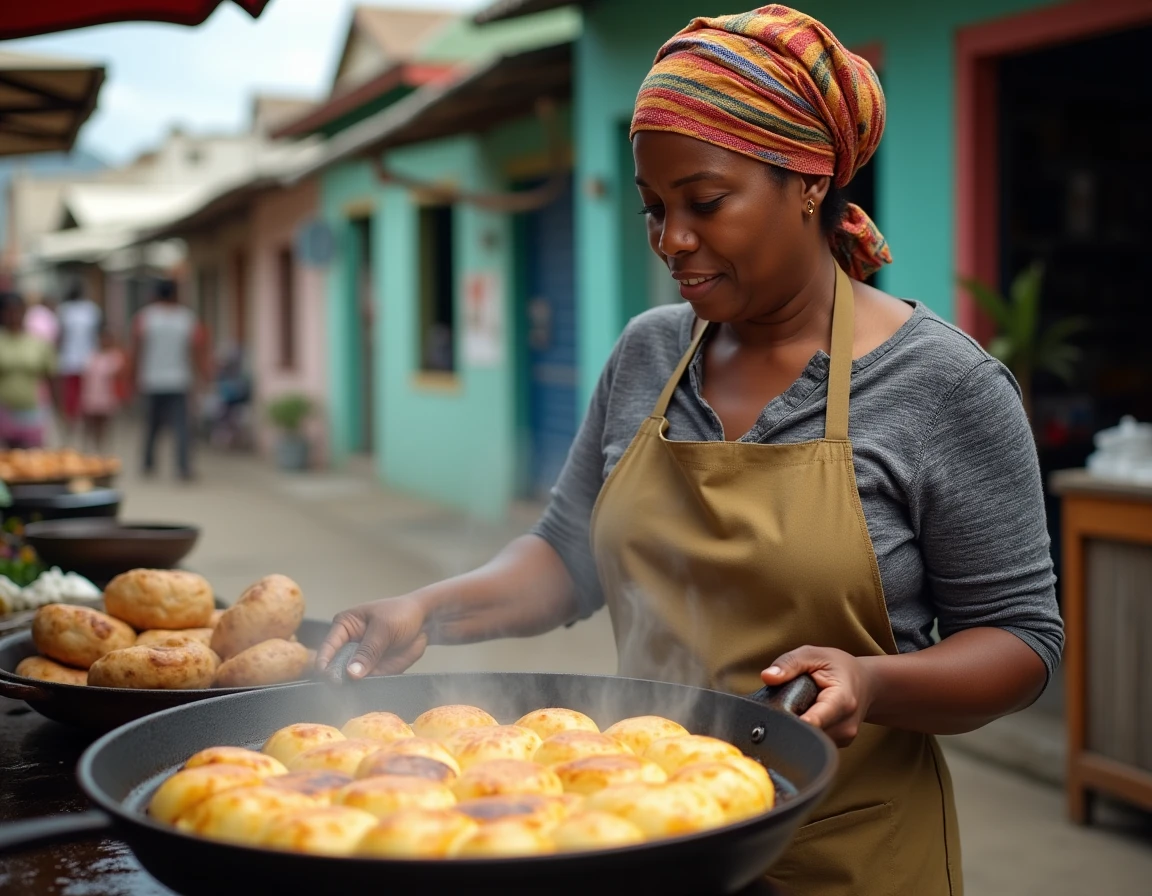
The bokit is a fried bread filled, not a sandwich in the bakery sense of the term. This technical distinction conditions everything: the cooking method, the final texture, the hold of the filling, and the behavior of the dough when tasted. Confusing the bokit with a simple stuffed bread misses what makes it unique in the landscape of Caribbean street foods.
From journey cake to bokit: a precise technical lineage
The most documented lineage connects the bokit to the johnny cake (or journey cake) of New England. The Shawnee Indians cooked a corn cake on hot stones, a dense, transportable product capable of feeding a worker for an entire day. European settlers substituted wheat flour for corn, transforming the cake into a softer flatbread.
This transition from corn to wheat constitutes the first technical break. Wheat flour brings gluten, thus a porous structure that the corn cake did not possess. When this recipe arrived in the Caribbean, a second break occurred: the cooking shifted from hot stones to frying in oil.
We can trace a three-step journey that sheds light on the origin of the Antillean bokit: Amerindian corn cake, European flatbread, then Creole fried bread filled. Each step modifies the raw material or the cooking method but retains the initial function of a compact and filling food.
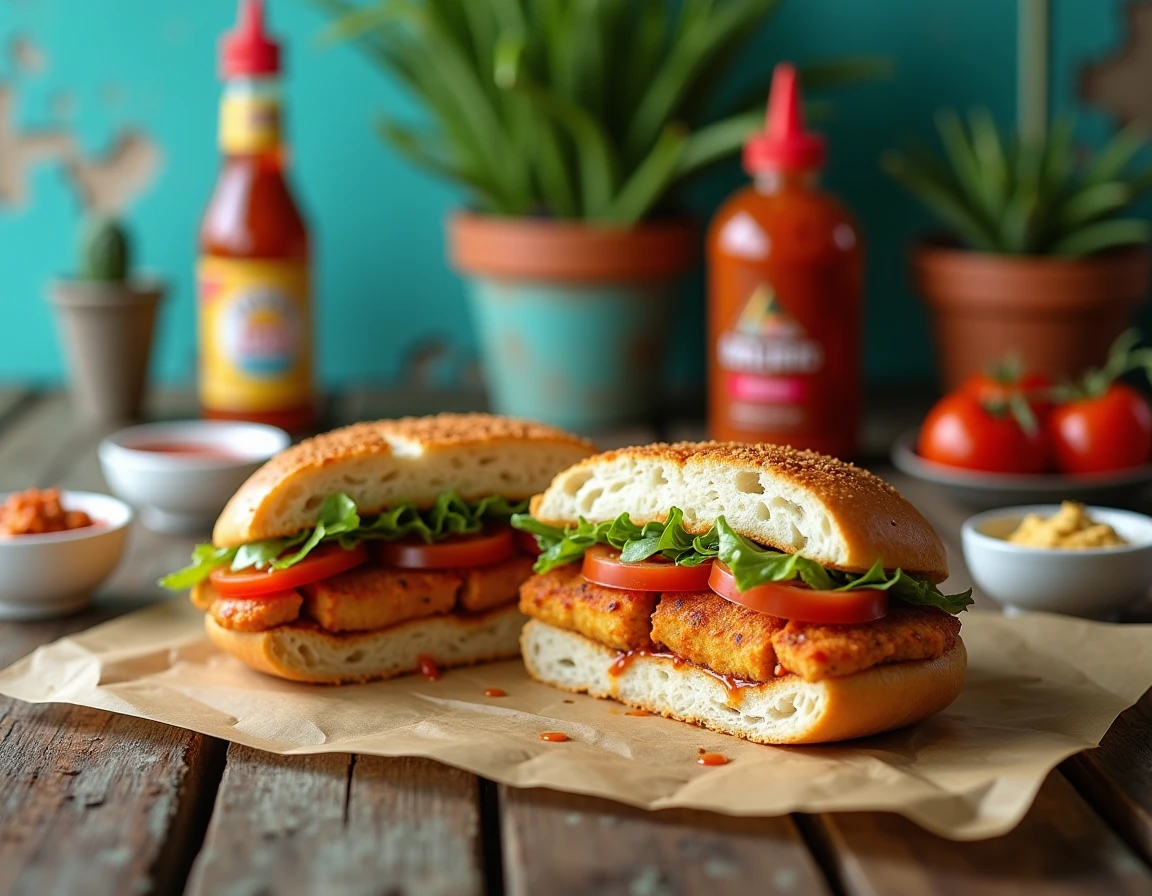
Composition of bokit dough: what simplicity hides
The basic recipe for bokit relies on four ingredients: flour, water, salt, and yeast. Some versions add a fat. This apparent simplicity masks a technical point that mainstream articles often overlook: the rising time and hydration of the dough determine the crispy texture of the finished product much more than the choice of frying oil.
An overly hydrated dough rises unevenly in the oil bath and produces air pockets that weaken the structure. An under-hydrated dough yields a compact result, close to a doughnut, without the characteristic lightness of a successful bokit. Guadeloupean cooks adjust this hydration by hand, without a scale, which explains the variability from one bokit to another.
Role of yeast and resting time
Baker’s yeast (not baking powder) ensures the fermentation of the dough before frying. The resting time varies according to the ambient temperature, a parameter that the tropical climate of Guadeloupe makes particularly sensitive. In warm conditions, the rising accelerates and can produce an overly airy dough if not monitored.
This detail distinguishes the bokit from other Caribbean fried breads like Trinidadian bake, which sometimes uses baking powder for a denser and less porous result. Slow fermentation with natural leaven remains rare, but some families continue this method.
Bokit and Caribbean bake: a relationship often misunderstood
The comparison between the Guadeloupean bokit and the bake from English-speaking islands (Trinidad, Saint Lucia, Dominica) appears in most narratives. We observe that this kinship is real historically, but the two products have diverged significantly.
- The Trinidadian bake is often baked in an oven or on a griddle, not necessarily fried, resulting in a less crispy crust and a tighter crumb
- The Guadeloupean bokit is always fried in oil, producing that characteristic golden, puffed envelope
- The filling of the bake leans towards shark (shark and bake), while the bokit accommodates cod, chicken, ham, cheese, or vegetables depending on local versions
- The name itself differs: “bake” refers to oven cooking (to bake), “bokit” phonetically derives from “bucket” according to some hypotheses, or more likely from the Creole deformation of “bake it”
This divergence confirms that the bokit is not a simple local copy of the bake, but an autonomous Creole creation born from a common foundation.

The bokit as a marker of Antillean culinary identity
The bokit has long held a place in popular cuisine, associated with plantation workers who needed a substantial and transportable meal. Guadeloupean cooks have developed around this fried bread a system of fillings adapted to available resources: salted cod, seasonal vegetables, spices, and Creole herbs.
This utilitarian dimension has evolved. The bokit has transitioned from a subsistence food to a street food product sold by mobile restaurants and food trucks, including in mainland France. This shift changes its status: it becomes an object of heritage and tourism narrative.
Entry into the dictionary and linguistic normalization
The word “bokit” has entered the French dictionary, a recognition that goes beyond the culinary realm. This linguistic normalization officializes a Creole term in standard vocabulary, a phenomenon still rare for overseas specialties. The bokit thus joins the short list of words of Antillean origin integrated into everyday French lexicon.
This lexicographical recognition accompanies the rise in gastronomic legitimacy of the product. The bokit is no longer seen as a roadside snack but as an integral part of Caribbean culinary heritage, alongside other Creole preparations built on the blending of African, European, and Amerindian flavors.
The journey of the bokit, from Amerindian cake to dictionary word, illustrates a trajectory that few street food items can claim. Its dough remains the same, four ingredients, a frying, a filling, but its status has changed.