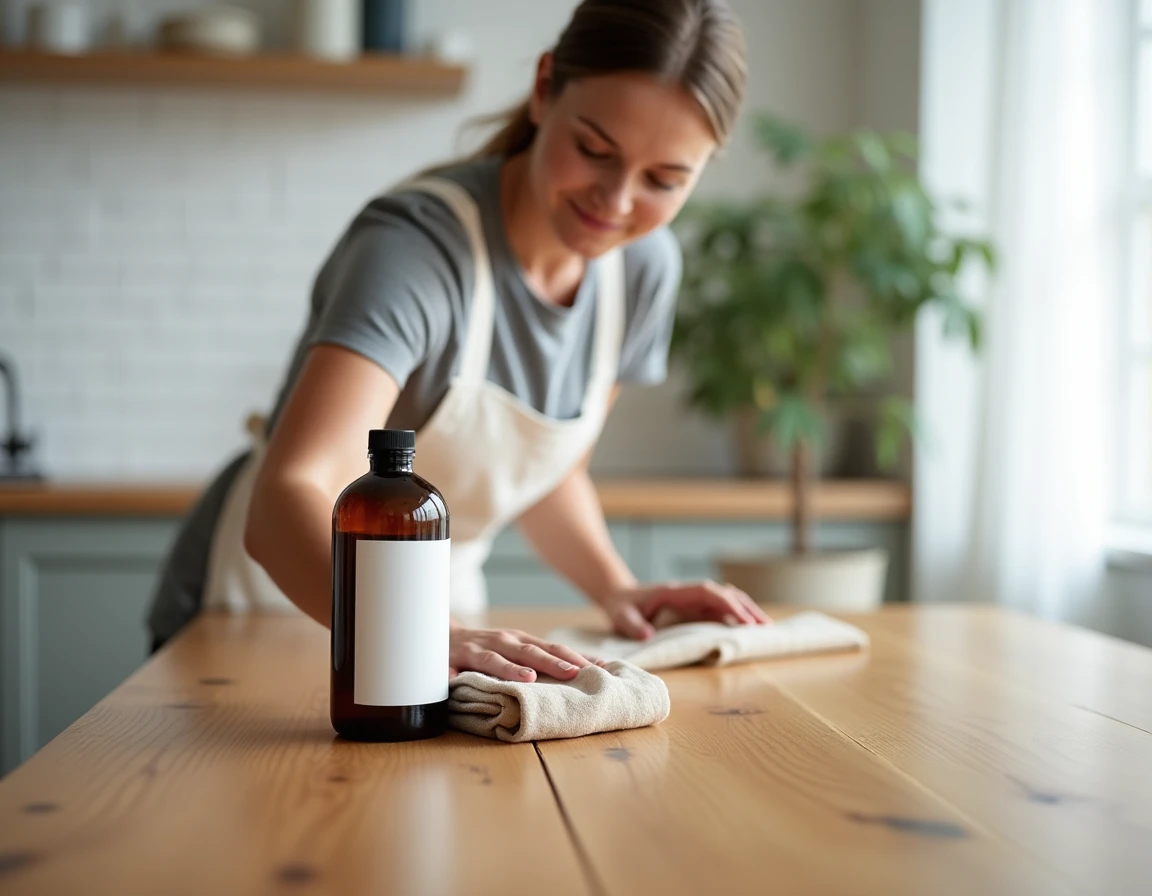
An oiled parquet that turns gray after two applications of multi-purpose cleaner, a waxed table that turns white under a glass spray, a varnished piece of furniture that becomes sticky after too much product: these situations arise whenever an unsuitable cleaner is used for the wood finish. The choice of the right product to maintain your wooden surfaces depends less on the brand than on the type of protection already present on the material.
Before comparing the formulas available in 2026, a simple diagnosis must be made: is your wood oiled, waxed, varnished, or raw? The answer determines everything else.
Wood cleaner and indoor air quality: the often-overlooked criterion
When thinking about maintenance, we think about stains and shine. Rarely about air pollution. However, ANSES and INERIS have documented that surface detergents, including those formulated for wood, can significantly contribute to indoor emissions of volatile organic compounds (VOCs). Products containing solvents or synthetic fragrances are the most affected.
In practice, a scented wood cleaner emits more VOCs than diluted black soap. Poorly ventilated rooms (hallways, bedrooms in winter) concentrate these emissions. If you clean a parquet in a closed space, air quality deteriorates within minutes.
To reduce this risk, prioritize formulas without fragrance or those bearing the European Ecolabel. This label, which has seen a significant increase in licenses for hard surface cleaning products in recent years, guarantees a strict ceiling on VOC emissions. It serves as a reliable selection filter when hesitating between two products on the shelf.
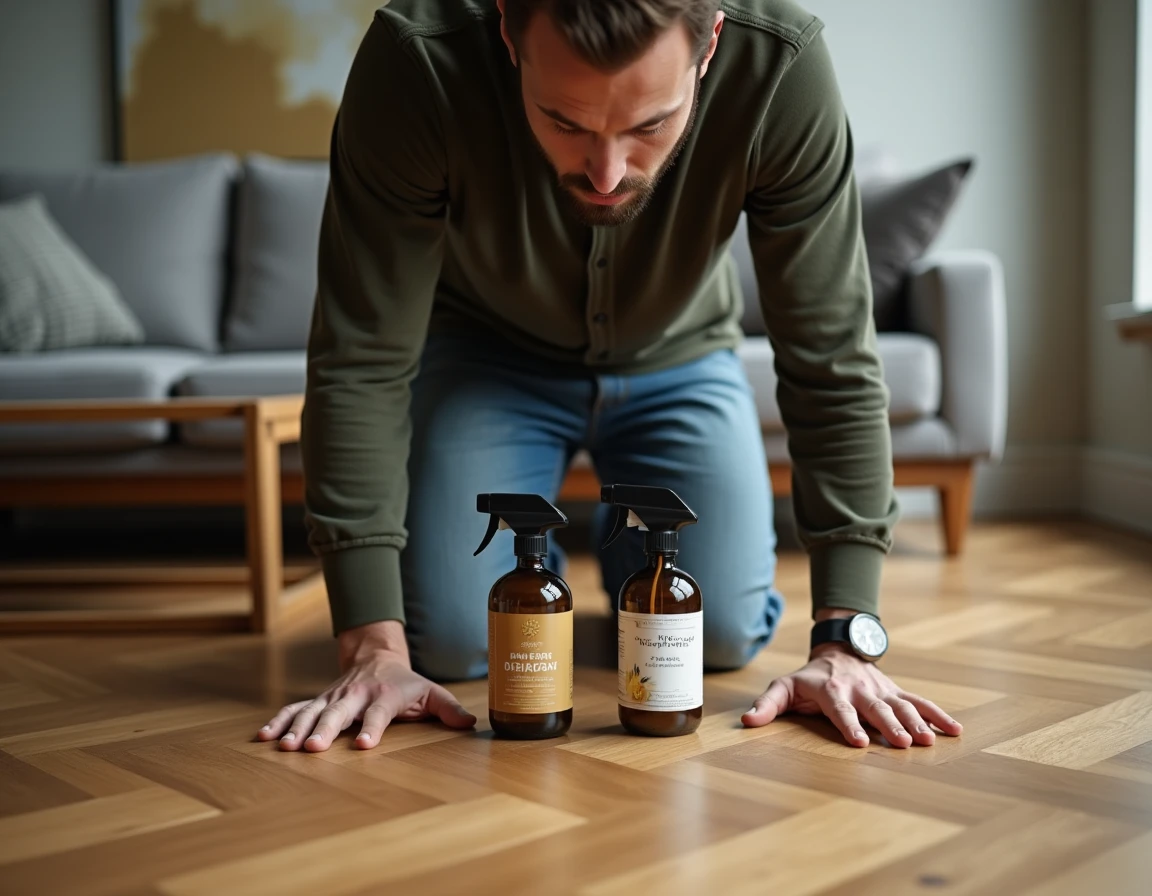
To compare formulations suitable for each finish, MetamorpHouse wood solutions detail the technical criteria by type of surface.
Cleaner for oiled, waxed, or varnished wood: what really changes
An oiled wood partially absorbs liquids. A varnished wood repels them on the surface. A waxed wood is in between. Applying the wrong cleaner degrades the finish faster than natural wear.
Oiled surfaces: specific soap or nothing
The maintenance soap for oiled wood (made from saponified vegetable oil) cleans without dissolving the oil layer. It is diluted in warm water and applied with a well-wrung cloth. A classic cleaner, even a “gentle” one, risks degreasing the surface and creating dull spots.
Opinions vary on commercial black soaps: some work well on oiled parquet, while others leave a greasy film depending on their concentration of linseed oil. The most reliable remains a soap formulated by the manufacturer of the oil originally applied.
Varnished surfaces: the simplest is enough
A varnished piece of furniture or parquet is cleaned with a damp cloth and a neutral product, without added wax or oil. Commercial “special varnished wood” cleaners sometimes provide a slight shine, but they do not penetrate the surface. Their real usefulness is limited.
On a varnish in good condition, warm water and a microfiber cloth do the job. The additional product is only useful if the varnish is worn and dull, to temporarily mask micro-scratches.
Waxed surfaces: wax nourishes and protects at the same time
On waxed wood, cleaning and protection are the same operation. First, dust is removed, then a thin layer of beeswax or vegetable wax is applied with a soft cloth. Commercial “wax cleaning sprays” combine a light solvent and suspended wax, simplifying the process.
A common pitfall: layering wax without ever stripping. The furniture ends up sticky and yellowing. A light stripping every two or three years, with diluted Marseille soap, starts fresh on a clean base.
2026 Reformulations: what the European restrictions on biocides change
Since 2023, several biocidal substances used in multi-purpose cleaners (notably some quaternary ammoniums) are undergoing reevaluations under Regulation (EU) No. 528/2012. The European Chemicals Agency (ECHA) has withdrawn or not renewed the approval of some of these substances, prompting manufacturers to reformulate their ranges.
In practical terms, wood cleaners containing aggressive biocides are gradually disappearing from the shelves. Replacement formulas are moving towards milder antimicrobial agents or completely abandoning the biocidal function, deemed unnecessary for everyday use on furniture.
For the user, the change is rather positive: fewer irritating substances, simpler formulas. The downside: some reformulated products lose effectiveness against mold on outdoor surfaces (terraces, cladding). For these specific uses, a dedicated fungicidal treatment remains necessary.
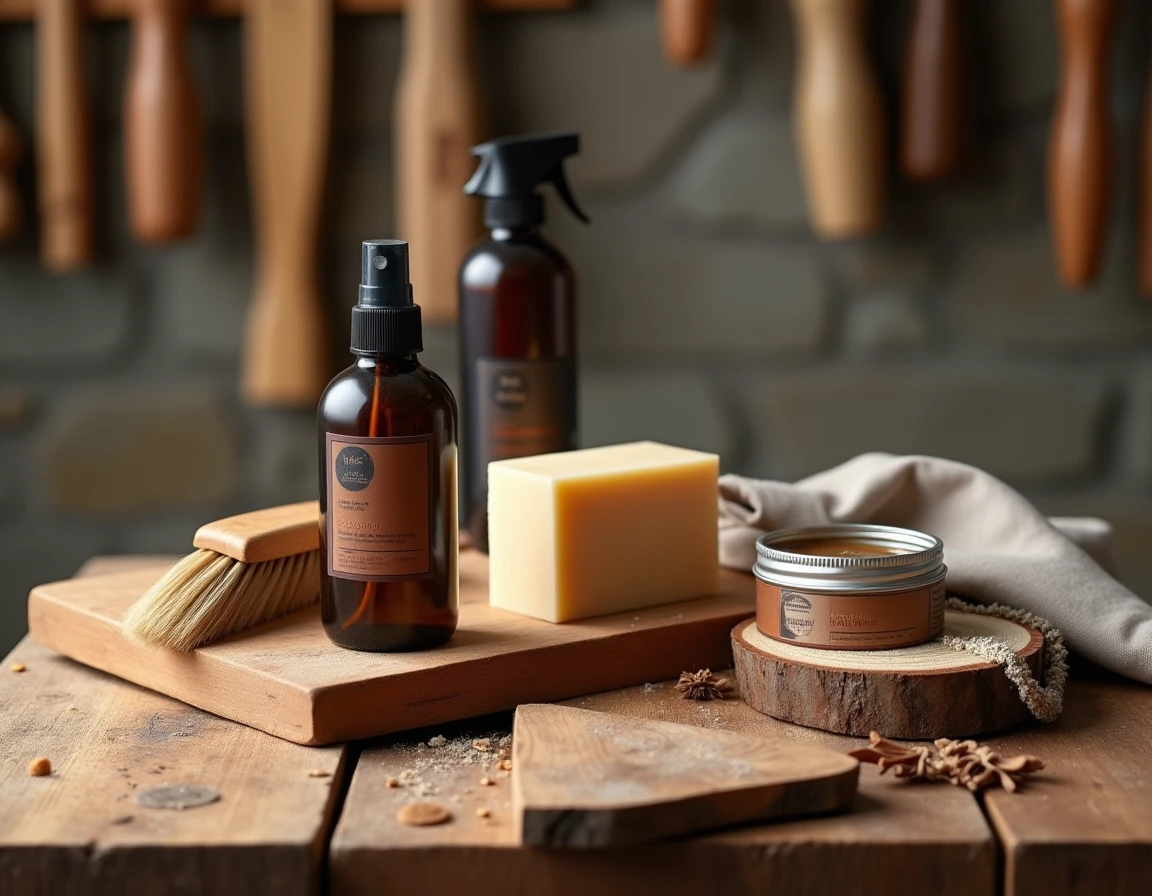
Quick choice grid by type of wood surface
| Type of finish | Suitable cleaner | What to avoid |
|---|---|---|
| Oiled wood | Maintenance soap for oiled wood, diluted in warm water | Degreasing cleaner, alcohol-based product |
| Varnished wood | Warm water + microfiber cloth (neutral product if needed) | Wax, oil, abrasive product |
| Waxed wood | Beeswax or cleaning-wax spray | Excess water, classic detergent |
| Raw wood | Very diluted black soap, immediate rinsing | Any product leaving a film (varnish, thick wax) |
| Outdoor wood (terrace) | Specific fungicidal cleaner + broom | High-pressure cleaner with direct jet |
Some guidelines to refine your choice:
- Check for the presence of the European Ecolabel if air quality concerns you, especially for closed rooms
- Prefer a fragrance-free product for regular cleaning of indoor wooden furniture
- Keep the reference of the original oil or varnish to buy compatible maintenance soap
- On old wood whose finish is unknown, test the product on a hidden area and wait for complete drying before generalizing
The right wood cleaner is not the most technical or the most expensive. It is the one that matches the existing finish, with the shortest possible formulation. In 2026, regulatory restrictions and the rise of the Ecolabel make this sorting easier: the products that remain on the shelves are generally safer than three years ago.