
Red hair gets its color from a particular type of melanin called pheomelanin. This pigment, responsible for coppery to auburn shades, differs from eumelanin, which produces browns and blacks. As melanin production decreases with age, the hair fiber gradually loses its pigmentation, but the way this process manifests directly depends on the starting pigment.
Pheomelanin and eumelanin: why redheads go gray differently
In people with brown or black hair, the decrease in eumelanin first produces gray shades, a mix of still-pigmented fibers and colorless fibers. Gray is a long and visible intermediate stage.
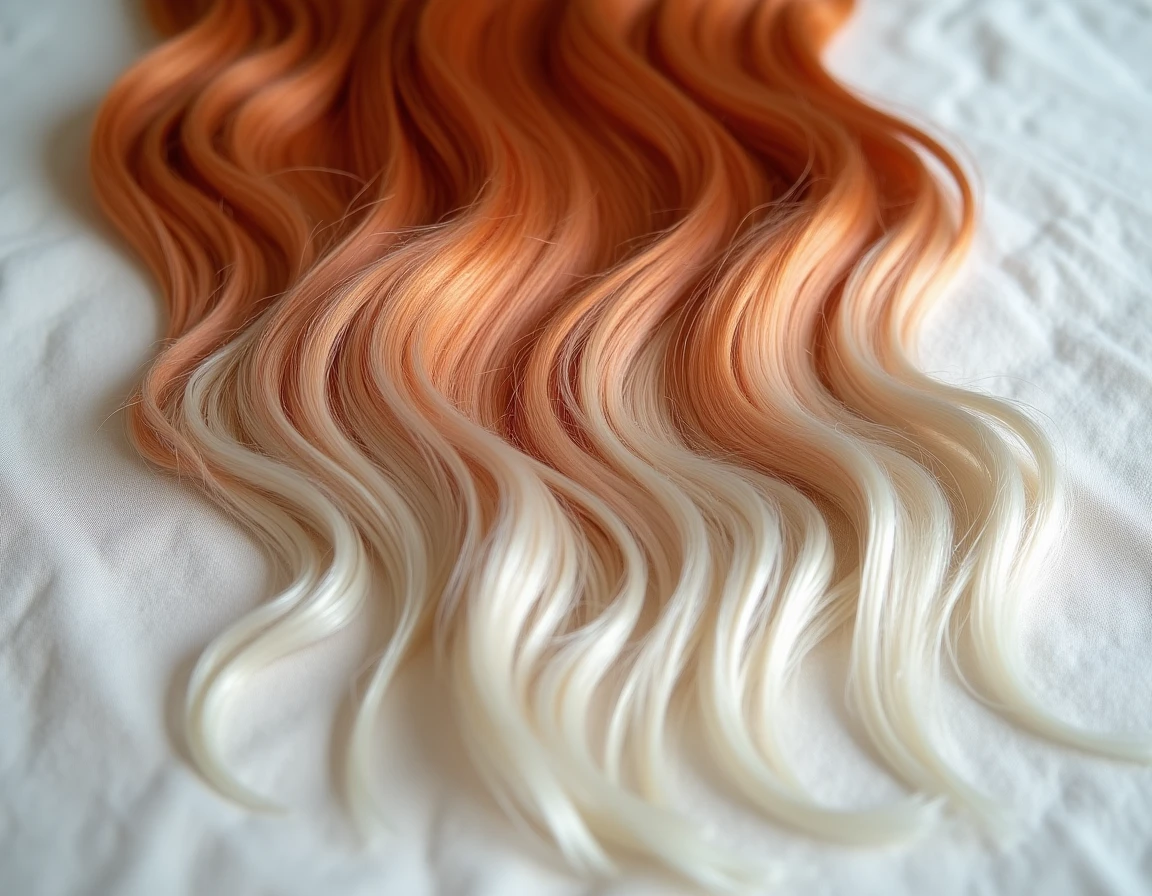
For natural redheads, the journey is different. Pheomelanin degrades in a pattern that often goes from coppery to a pale Venetian blonde, then to almost pure white. The gray stage, so familiar in brunettes, is much less pronounced. Red hair often transitions from copper to white without a true gray stage, which surprises and alters the transition strategy.
This peculiarity is explained by the very nature of the pigment. Pheomelanin, being lighter than eumelanin, produces a less stark contrast between still-pigmented hair and depigmented hair. The resulting visual mix leans towards rosy blonde or cream white rather than the classic salt and pepper. Understanding the transition from red hair to white hair allows for anticipating these stages without trying to replicate advice meant for other hair bases.
Natural red hair and colored red hair: two distinct transitions
One point that most transition guides overlook: regrowth is managed very differently depending on whether the red is natural or achieved through coloring.
Natural red: a gradual depigmentation
Natural red hair loses its pheomelanin fiber by fiber. Some strands turn white while others retain their coppery hue for years. This coexistence creates a mix of highlights that can range from strawberry blonde to pearly white on the same head of hair.
The contrast between still-pigmented strands and white strands remains soft. The transition is gradual, and the demarcation line at the roots is less harsh than in a person with dark hair.
Colored red: artificial pigment plus depigmentation
If the red comes from a hair dye, two phenomena overlap. The artificial color fades with each shampoo, while the regrowth shows the natural color (which may already be partially white). The result is a very visible gray or white root under an artificial red that fades to a washed-out orange.
The transition strategy differs radically. Spacing out colorings is not enough: it is also necessary to manage the fading of the artificial pigment, which does not disappear at the same rate as natural regrowth. A plant-based dye can soften this demarcation, as it deposits the pigment on the surface without penetrating the cortex of the fiber.
Visible stages of the transition from red to white
The transformation generally follows a progression in three phases, the duration of which varies according to the density of white hair and the rate of growth.
- Muted copper phase: the first white hairs appear at the temples and on the top of the head. The dominant red visually absorbs these few white fibers, which go almost unnoticed. The mix gives a slightly lighter red effect.
- Venetian blonde phase: as the proportion of depigmented hair increases, the hair takes on an intermediate shade between red and white. The coppery highlights persist, but the base lightens significantly. This stage often lasts longer than the others.
- White phase: the majority of fibers have lost their pheomelanin. White dominates, sometimes with slightly golden highlights that recall the red base. The texture of the hair also changes at this stage, becoming drier and often thicker in diameter.

Hair care suited to transitioning red fibers
Red hair has a particular structure. Its diameter is generally thicker than that of brown hair, but the overall density of the hair is lower (fewer hairs on the scalp). As it loses its pigmentation, this already dry fiber becomes even more vulnerable to breakage and external aggressions.
Three points deserve specific attention during the transition:
- Hydration of the fiber. White hair lacks the natural protection that melanin provided against UV rays. A leave-in treatment containing a sun filter limits yellowing and dryness.
- Management of yellow tones. Residues of pheomelanin can give a dull yellow or coppery appearance to hair at the end of the transition. A purple pigment shampoo, used once a week, neutralizes these tones without damaging the fiber.
- Mechanical protection. White hair breaks more easily. Reducing the heat from the hairdryer, avoiding tight elastics, and favoring a wide-toothed comb preserve length during regrowth.
Plant-based coloring (neutral henna, for example) can also coat the fiber without changing the color, adding volume and shine to hair in full transformation.
Each redhead follows their own depigmentation schedule. Genetics determines the pace, and no hair technique can speed it up or slow it down. The challenge lies in supporting each phase with the right actions, rather than attempting to control a biological process that, for redheads, often produces a bright and unique final result.